Custom Handling Solutions for Precast Components and Modular Construction
Precast concrete, also known as PC components, refers to concrete structures manufactured in a factory setting through standardized, mechanized production. This contrasts with traditional cast-in-place concrete, which is molded, poured, and cured directly at the construction site.
Precast concrete products are widely used in residential and commercial buildings, infrastructure projects, and energy facilities—including battery storage stations, substations, and transport tunnels—making them a critical part of modern industrial development.
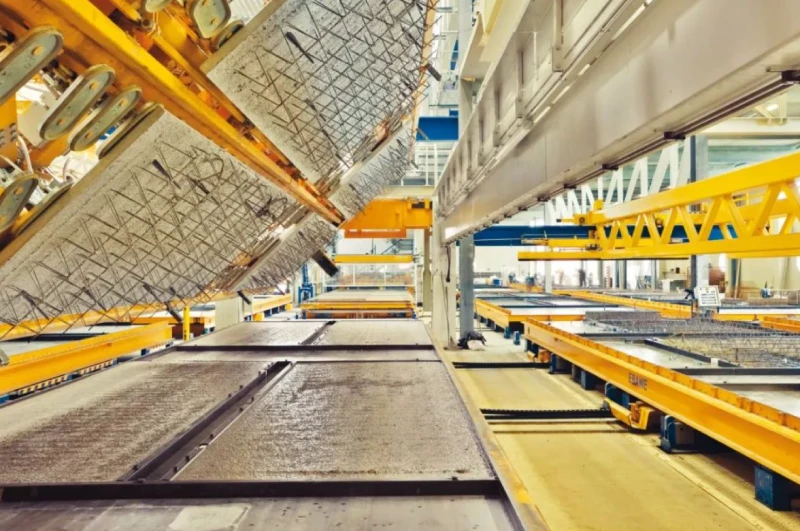
Advantages of Precast Concrete Over Cast-in-Place Construction
- Safety: Factory-based operations reduce on-site construction risks
- Quality: Mechanized processes ensure consistent product precision
- Speed: Standardized sizes and connection points accelerate installation
- Cost-Effectiveness: Reusable molds and lower labor requirements reduce total costs
- Environmental Impact: Minimal dust, noise, and disruption at the construction site
Due to these benefits, precast concrete is gaining momentum not only in China but also in Europe, Japan, South Korea, Southeast Asia, and the Middle East.
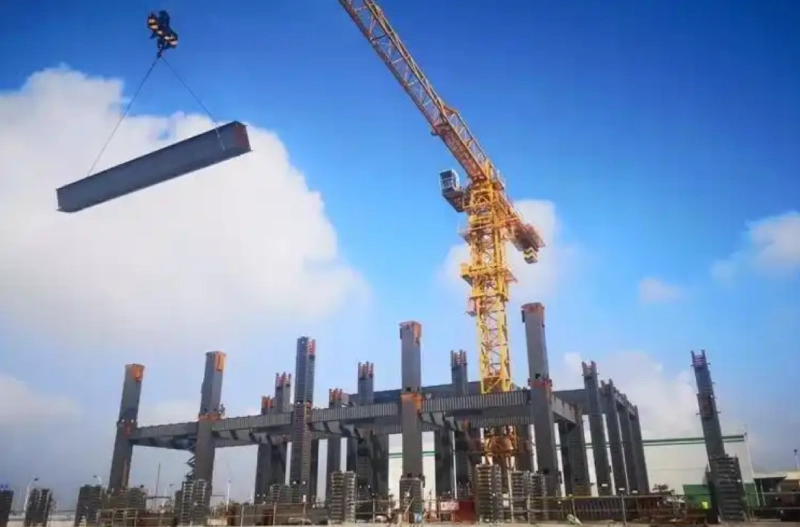
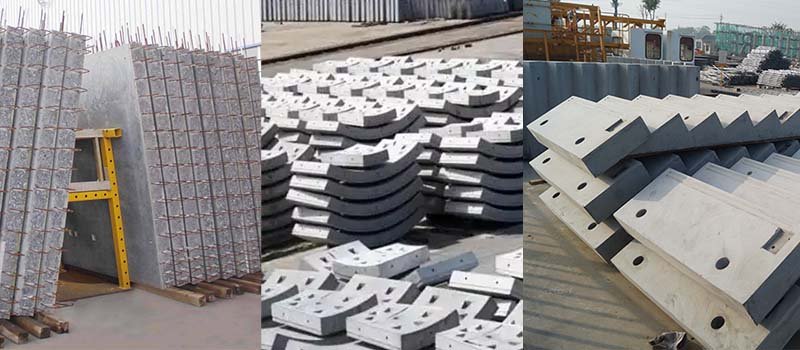
Types of Pre-CAST Components Supported by HENSEN
- Structural elements: precast walls, floors, stairs, balconies, beams, columns
- Infrastructure units: subway tunnel segments, highway barriers, bridge girders
- Battery storage enclosures: heavy-duty precast concrete cabins for ESS systems
HENSEN’s Transport Solutions for Precast Plants
Since 2014, HENSEN (HAOSHENG) has served over 100 precast concrete manufacturers and EPC contractors, including major clients such as:
- CSCEC (China State Construction Tech)
- Yuanda Group
- China MCC 5 Group
- China Railway Construction Corp (CRCC)
We offer a full portfolio of industrial transport equipment:
| Equipment Type | Suitable Use Case |
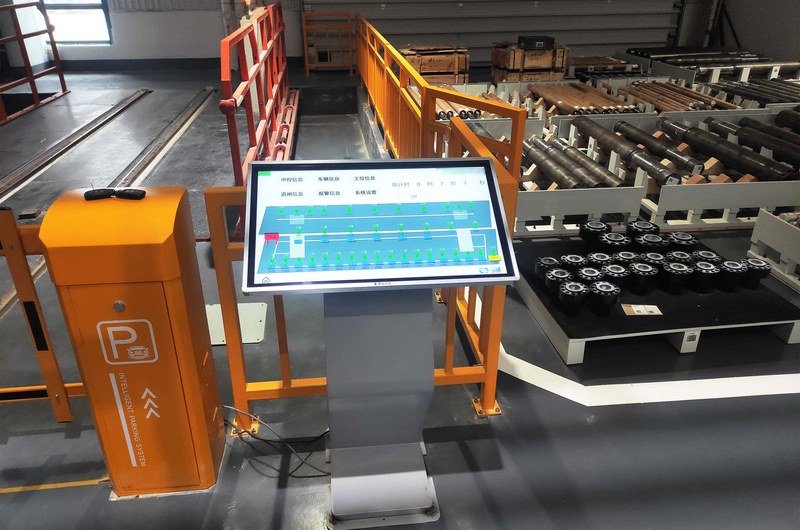
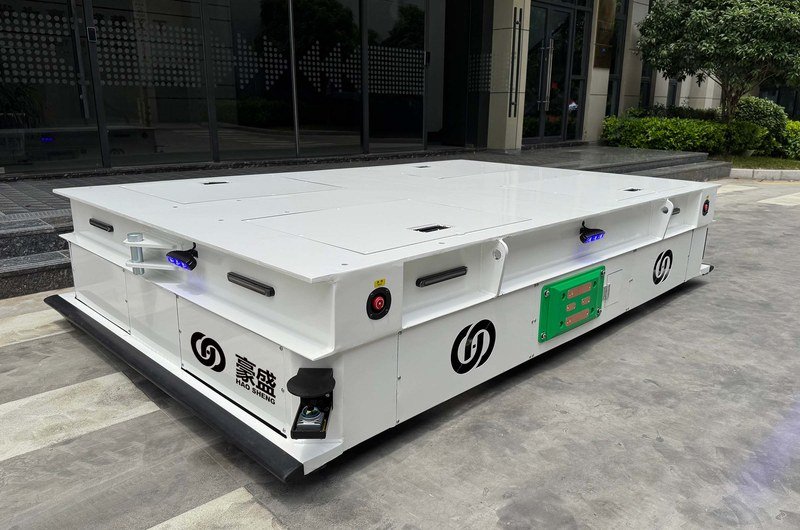
| AGV (Automated Guided Vehicle) | High automation, indoor production lines |
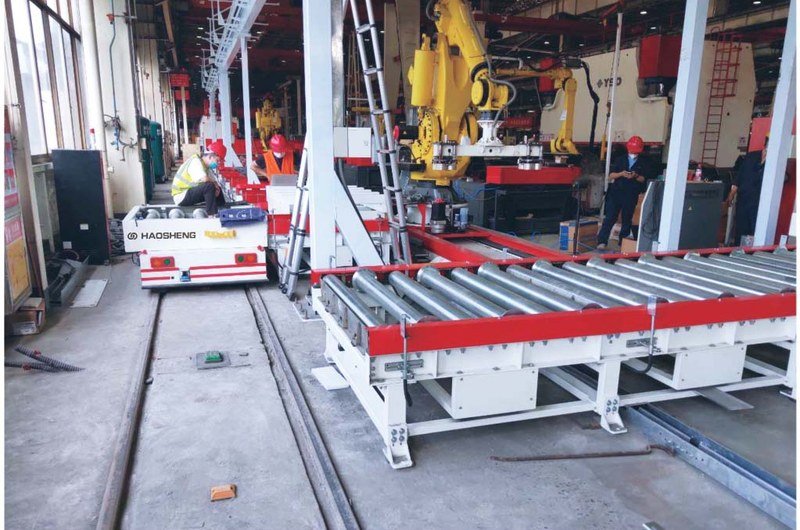
| RGV (Rail Guided Vehicle) | Economical alternative for fixed routes |
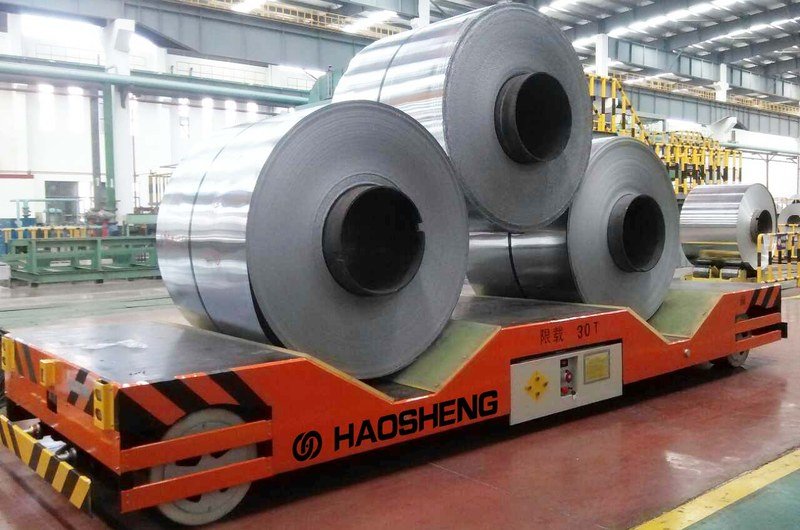
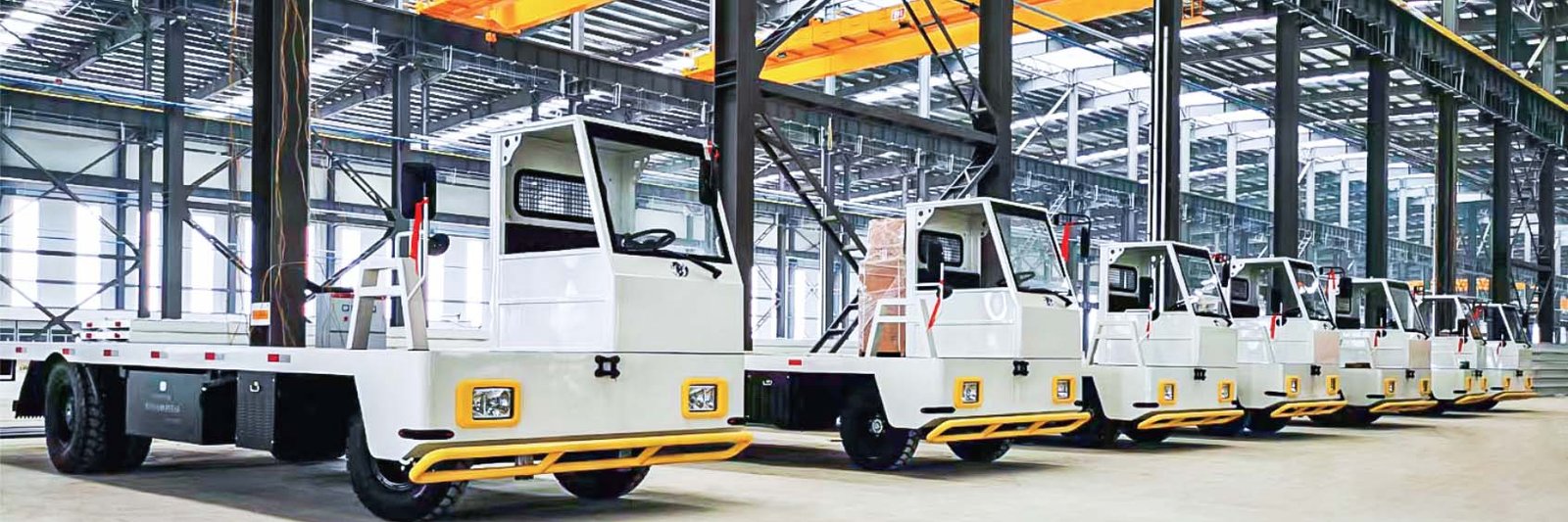
| Electric Platform Truck | Most popular model, suitable for both indoor and outdoor transfer |
| Electric Tow Tractor + Double-head Trailer | Flexible, scalable transport of long precast components |
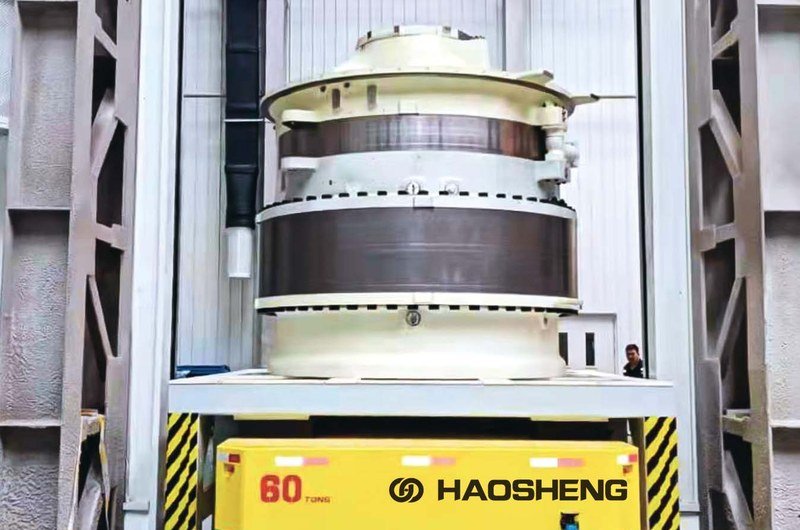
| Trackless Transfer Cart | Ideal for non-linear movement in confined spaces |
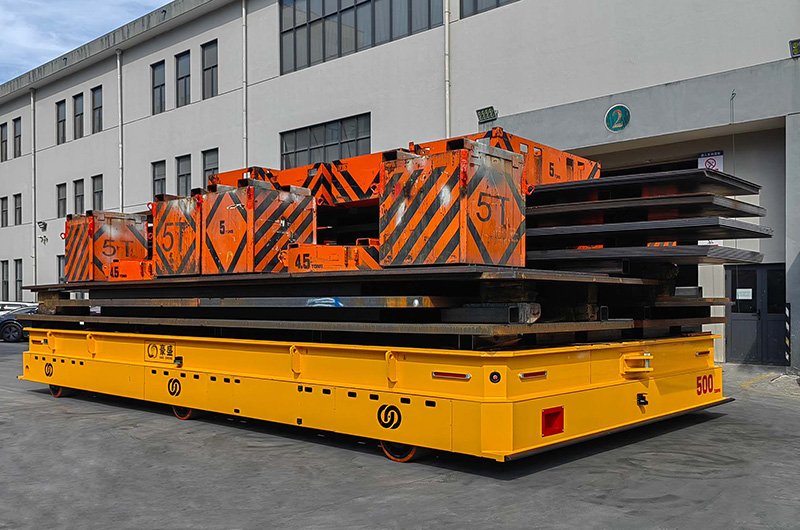
| Rail Transfer Cart | Heavy load, short-distance repetitive movement |
Electric Platform Truck: Top Choice for Precast Handling
Among all options, the Electric Platform Truck is the best-selling model for precast logistics in the Chinese market. Key advantages:
- 🧭 Compact structure, easy to maneuver in narrow spaces
- ♻️ Zero emissions, low noise, no pollution
- 🚫 No need for a commercial truck license
- 🏭 Suitable for inter-line indoor transport or outdoor yard deliveries
- 🧑✈️ Optional driver’s cabin for outdoor driving comfort
Real-World Use Cases
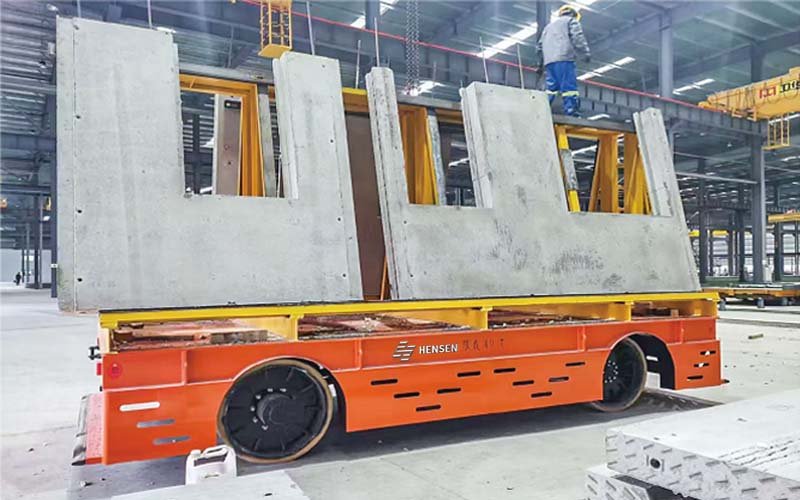
AGV or trackless transfer cart for tunnel segment handling
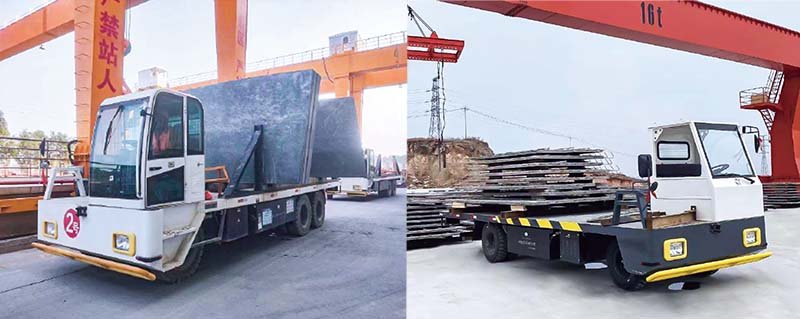
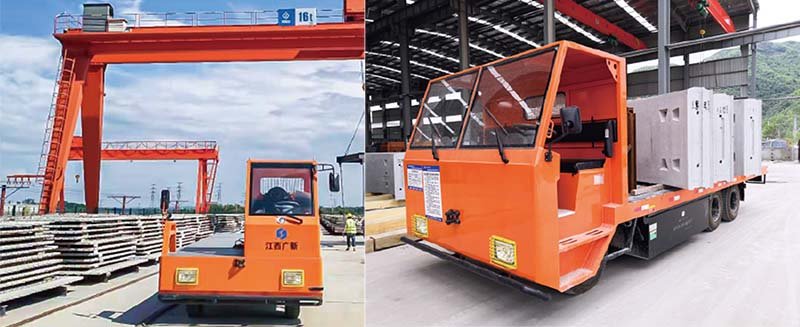
Electric platform truck for wall and slab delivery
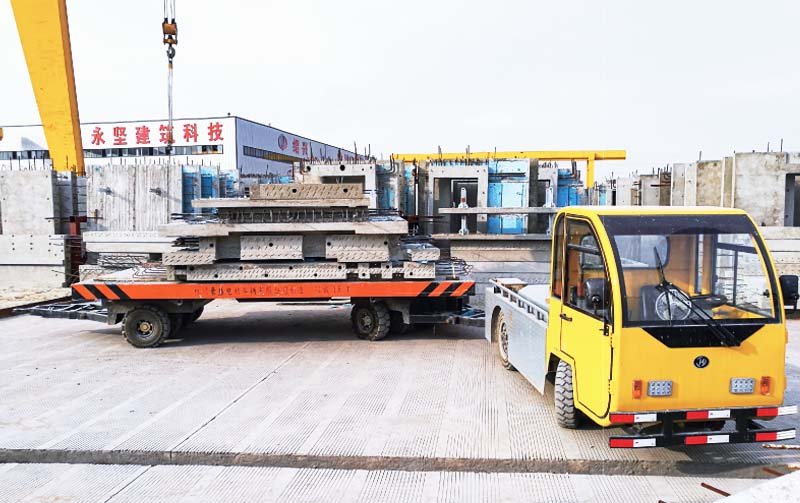
Electric tractor + twin trailers for precast concrete components
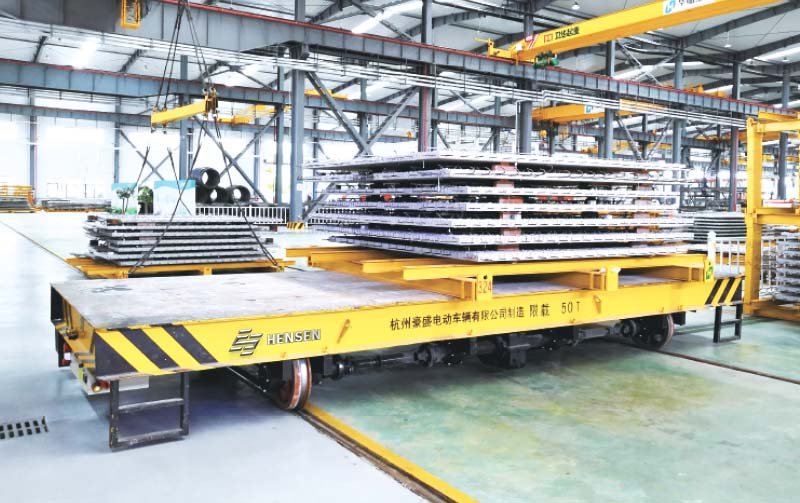
Rail cart for heavy-duty batch transfers between workshops and yards
Boost Your Precast Operations with HENSEN’s Smart Transport Solutions
Whether you’re producing building components, infrastructure elements, or ESS enclosures, HENSEN can provide a tailored material handling solution to fit your workflow, site layout, and automation goals.
📩 Contact us today to request a free consultation or project evaluation.