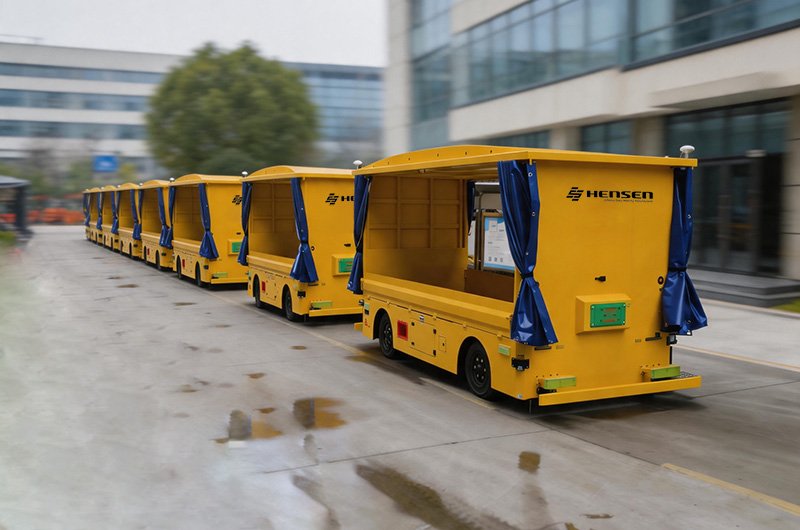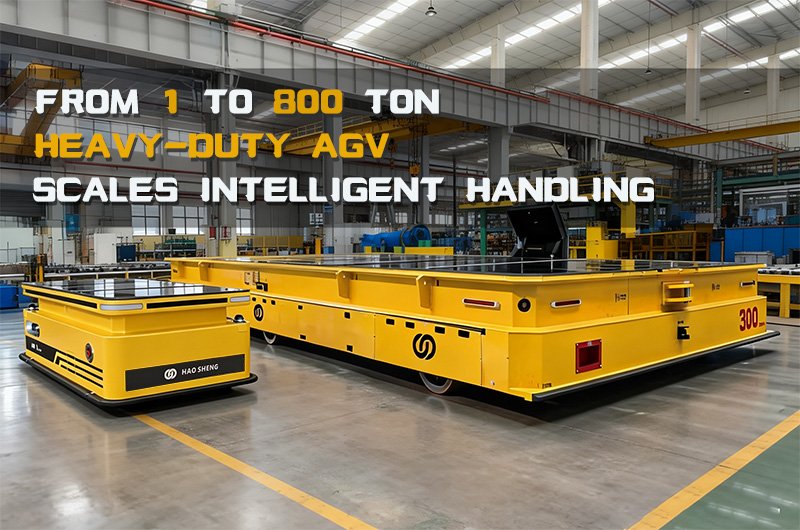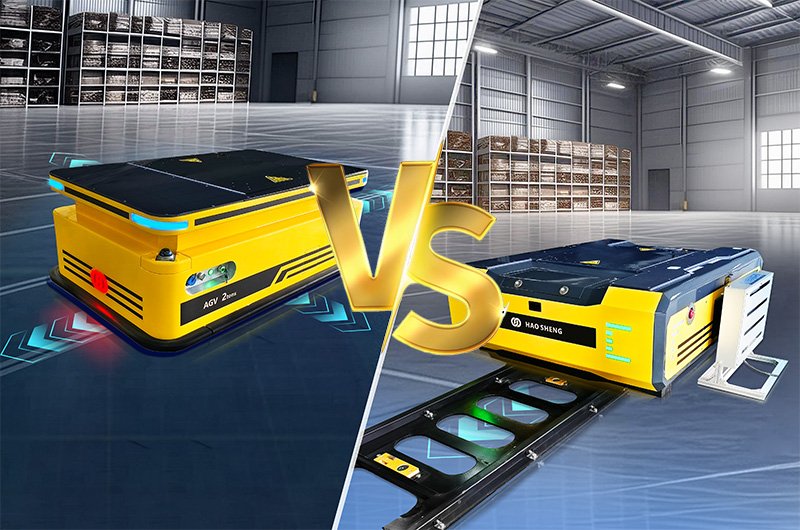
In automotive plastic parts manufacturing, injection molds are not just tools. They are heavy, valuable production assets that directly affect changeover speed, workshop safety, and line availability.
For manufacturers producing automotive bumpers, dashboards, and other large plastic components, mold changeover can become a serious bottleneck as product types increase. In this project, the customer had originally stored molds beside each injection molding machine. As production capacity grew, the workshop became crowded, mold management became less efficient, and the available space around the machines was no longer enough for safe handling. The customer decided to build a centralized mold storage area and needed an automated transport system to move molds between the mold warehouse and multiple injection molding machines. HENSEN AGV provided a customized heavy-duty AGV solution designed for high-load mold transfer, narrow workshop routes, and strict safety requirements in a shared production environment.
Project Background: From Machine-Side Storage to Centralized Mold Logistics
The customer operates in the automotive parts supply chain, where plastic pellets are processed through injection molds to form large vehicle components. With more product models entering production, the number of molds increased quickly. Keeping molds near each injection molding machine created three problems:
- Limited workshop space around the machines
- Longer mold search and changeover preparation time
- Higher safety risk when heavy molds were moved manually or by conventional equipment
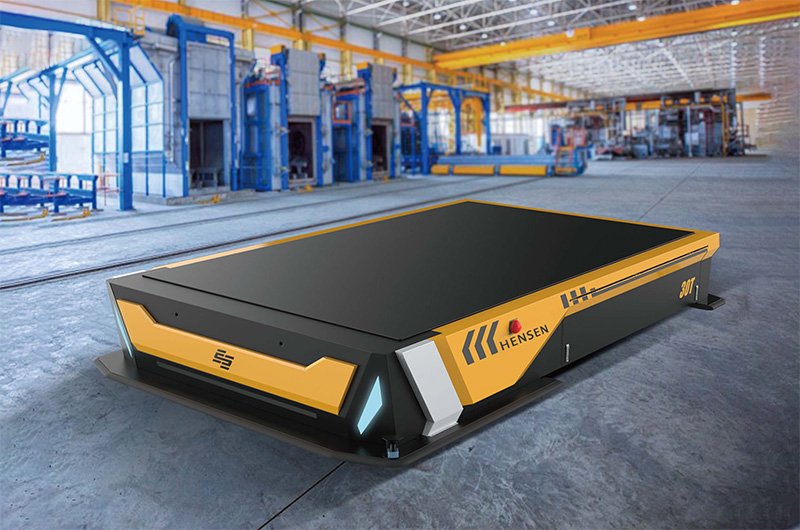
To solve this, the customer planned a dedicated mold warehouse. The new workflow required the AGV to pick up a mold from the storage area, travel through shared plant aisles, deliver it to the assigned injection molding machine, support the mold change process, and then return the replaced mold to the warehouse. This was not a standard material handling task. Each mold weighed approximately 15-16 tons, and during the changeover process, the AGV could face a static load of more than 30 tons. The vehicle needed to be compact enough for the existing plant layout while strong enough for heavy-duty mold handling.
HENSEN Custom AGV Solution for Heavy Mold Transfer
As a custom AGV manufacturer focused on heavy-load in-plant logistics, HENSEN AGV designed the system around the customer’s actual mold dimensions, floor conditions, traffic routes, safety requirements, and charging environment.
The main workflow included:
- The AGV receives a dispatching task from the control system.
- It travels to the centralized mold warehouse and positions for loading.
- It transports the new mold through the planned aisle route.
- It arrives at the injection molding machine and supports the changeover process.
- After the old mold is removed, the AGV carries it back to the mold warehouse.
- The system completes the closed-loop transfer automatically.
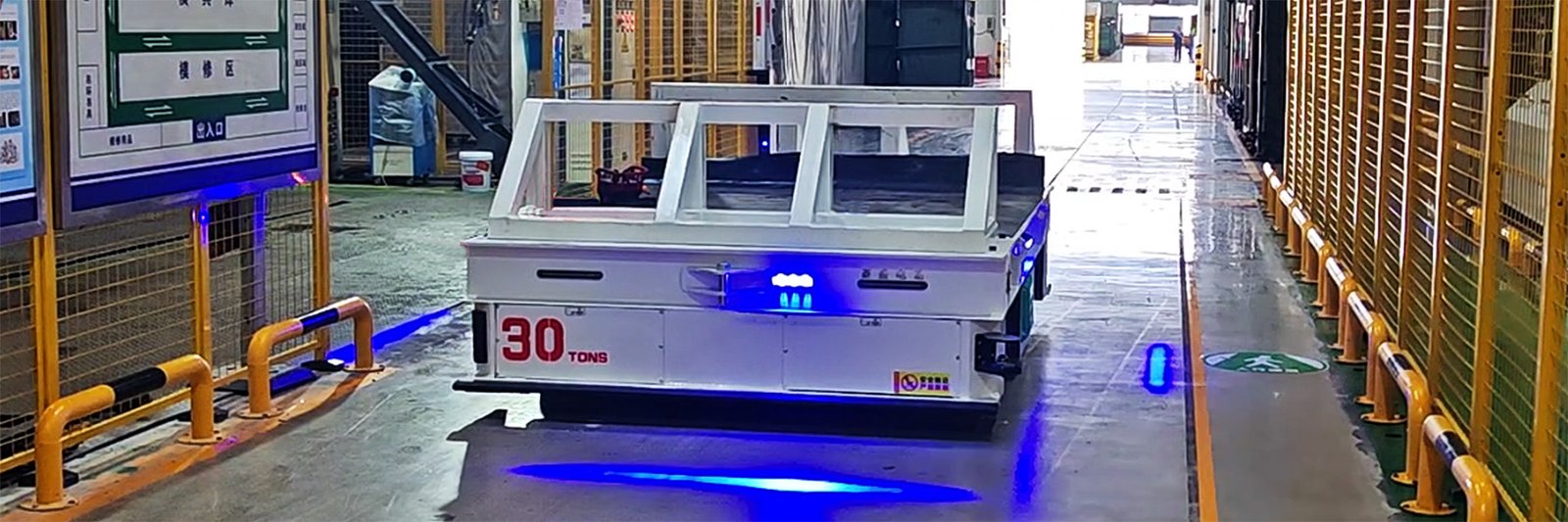
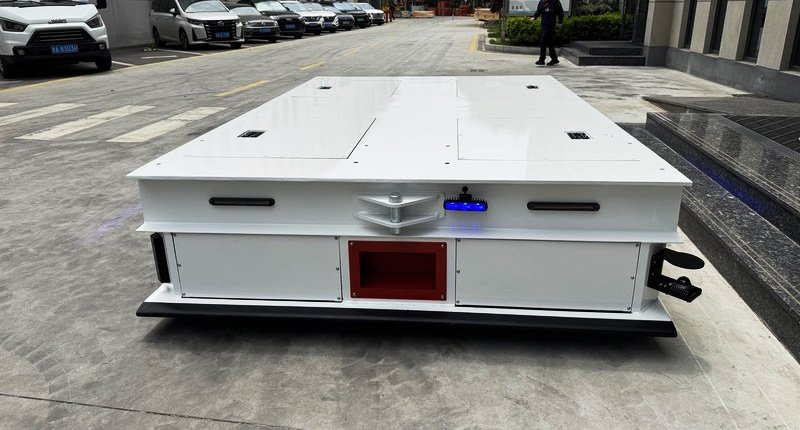
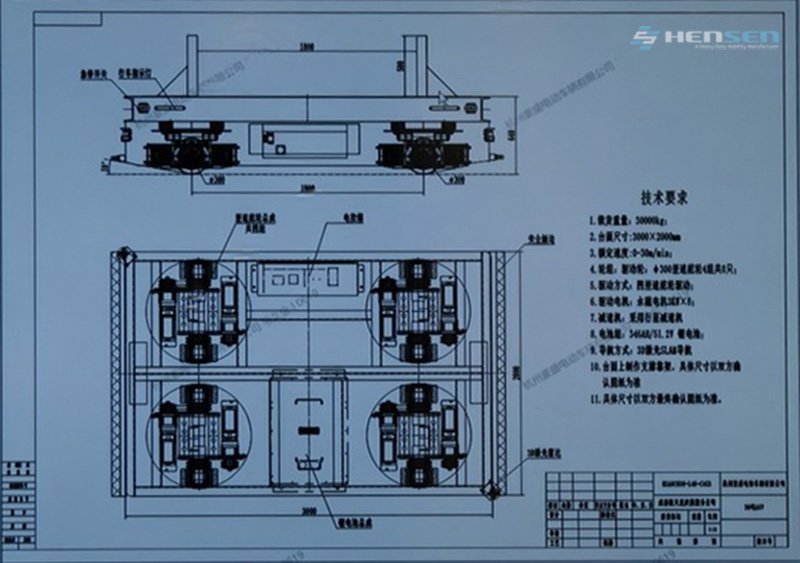
The AGV was engineered with a heavy-duty flat platform, reinforced structure, and customized tooling on the deck. Because the molds were tall and flat, HENSEN added support frames and anti-tipping protection to help keep the load stable during movement, acceleration, braking, and positioning.
Safety Design for Shared Workshop Aisles
One of the most important parts of this project was safety. The AGV route passed through public workshop aisles where people and other vehicles might appear. For this reason, HENSEN AGV combined vehicle-level safety with plant-level traffic control.
Key safety measures included:
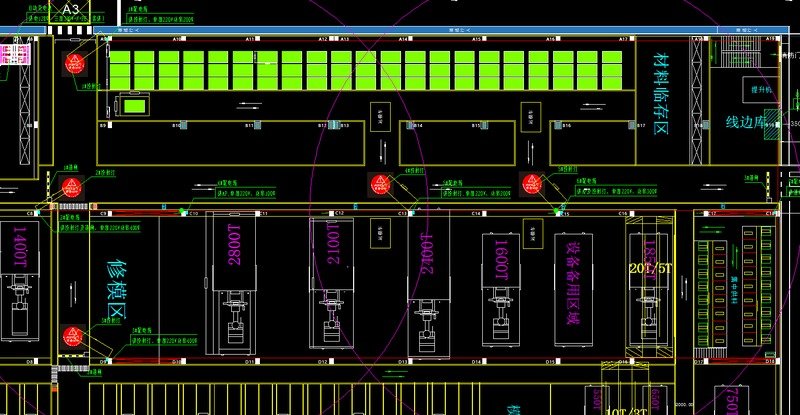
- Barrier gates installed at critical route intersections
- Sound alarms to warn workers before and during AGV movement
- Projection warning lights on the floor to make the AGV operating zone visible
- Vehicle side warning lights for better visibility
- Mechanical support frames on the AGV deck to prevent the mold from tilting
- Route planning and dispatching logic to reduce conflict with other traffic
When the AGV runs, the barrier gates close to isolate the route section. At the same time, warning lights and audio alerts remind nearby workers to stay clear. This combination is especially important for heavy-duty AGV applications where the load is compact in size but extremely heavy.
Implementation Challenge 1: Accurate Charging Inside a Compact Fire-Safe Charging Room
The customer built a dedicated charging room for the AGV based on fire safety requirements. This room was relatively enclosed and compact. During commissioning, the laser navigation system could not always identify the charging position accurately because the space had limited features and the docking area was tight.
HENSEN solved this by adding magnetic guidance for the final charging approach. The AGV continued to use laser navigation for normal operation, while magnetic strip assistance improved repeatable positioning inside the charging area. This hybrid approach helped the vehicle achieve reliable automatic charging without changing the main navigation strategy for the production route.
This is a practical reminder for AGV projects: charging conditions should be reviewed early, especially when the charging station is located inside a small room, behind a door, or in a space with limited positioning references.
Implementation Challenge 2: Running Through Narrow Aisles
Another challenge was the limited clearance in part of the route. In general, AGV operation requires enough side clearance for safe travel, maintenance access, and tolerance during positioning. However, one section of the customer’s workshop had only a very small margin on both sides. HENSEN engineers adjusted the on-site map, optimized the route, and fine-tuned vehicle positioning to help the AGV pass through the narrow section smoothly. For a Custom AGV project, this type of on-site commissioning is often the difference between a vehicle that works in theory and a system that works reliably in daily production.
Implementation Challenge 3: Tooling Adaptation for Real Mold Dimensions
Mold transfer AGV projects require close attention to the actual dimensions, center of gravity, support points, and loading method of every mold type. During this project, the tooling design needed further adjustment after real mold conditions were reviewed on site. HENSEN modified the support structure to better match the mold size range and improve load stability.
For buyers evaluating an AGV manufacturer, this point is important: heavy-duty automation is not only about rated load. A successful mold transfer system also depends on correct load interfaces, fixture design, safety margins, floor conditions, charging layout, wireless network coverage, and detailed confirmation before production.
Project Results
After commissioning and adjustment, the heavy-duty AGV system entered stable operation. The customer was able to automate mold transfer between the centralized storage area and injection molding machines, reducing dependence on manual transport while improving workshop organization and safety.
The system delivered value in several ways:
- Centralized mold storage released space around injection molding machines
- Automated dispatching supported a more organized mold change workflow
- Heavy-duty carrying capacity met the requirements of 15-16 ton molds and higher static loading during changeover
- Barrier gates, warning lights, sound alarms, and deck protection improved route safety
- Hybrid positioning at the charging area improved automatic charging reliability
- On-site route tuning enabled operation in constrained workshop conditions
For injection molding plants, mold manufacturing workshops, and automotive parts factories, this case shows how a heavy-duty AGV can be customized to solve real material handling constraints rather than forcing the factory to fit a standard vehicle.
Why Choose HENSEN AGV for Custom Heavy-Duty Handling?
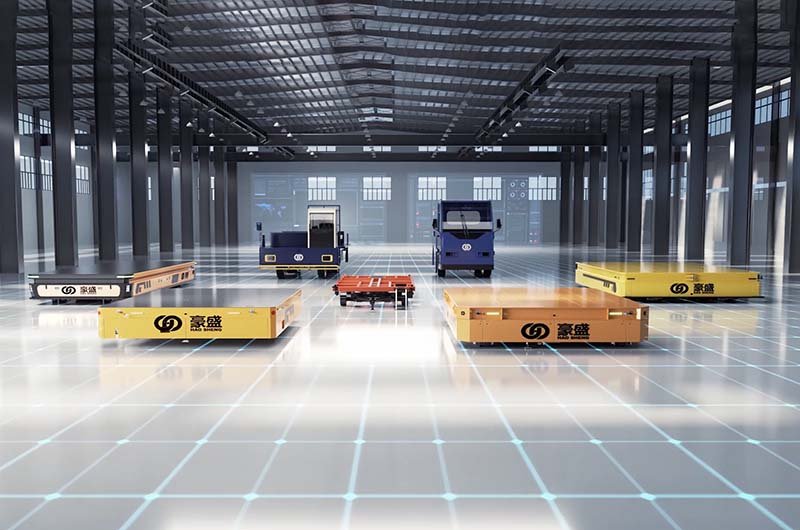
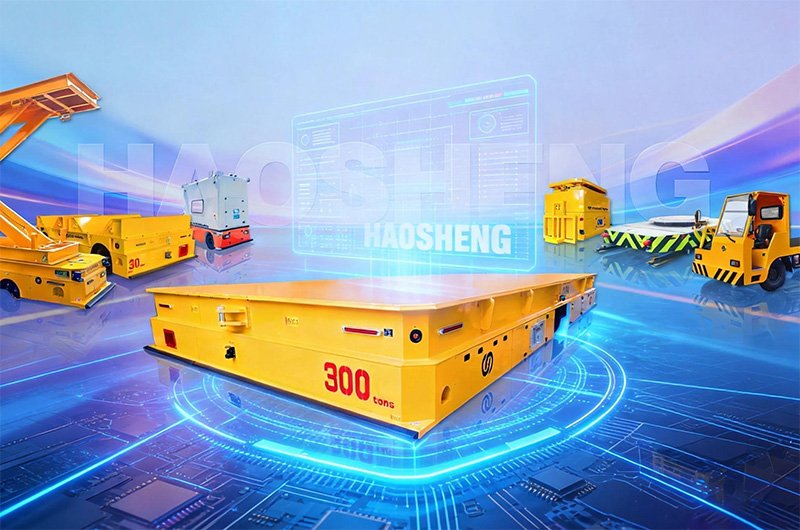
HENSEN AGV focuses on custom heavy-duty AGV, RGV, and electric transport solutions for industrial material handling. Instead of offering only standard models, HENSEN develops project-specific systems based on payload, route, process flow, safety requirements, and the real constraints of the customer’s workshop.
If your factory needs to move injection molds, dies, tooling, steel structures, long components, or other heavy industrial loads, choosing an experienced AGV manufacturer can help reduce project risk from the early planning stage.
Before starting a similar project, HENSEN recommends confirming:
- Maximum mold weight and temporary static load during changeover
- Mold size range, center of gravity, and support method
- Aisle width, turning space, and side clearance
- Floor flatness and load-bearing capacity
- Charging room layout and docking conditions
- Wireless network coverage along the full AGV route
- Required safety devices for people, forklifts, and public aisles
Need a Custom AGV for Mold Transfer?
If you are planning to automate mold logistics in an injection molding plant or build a centralized mold warehouse, HENSEN AGV can help evaluate your workflow and develop a custom heavy-duty AGV solution for your site.
Contact HENSEN AGV to discuss your mold transfer requirements and receive a project-based handling solution.