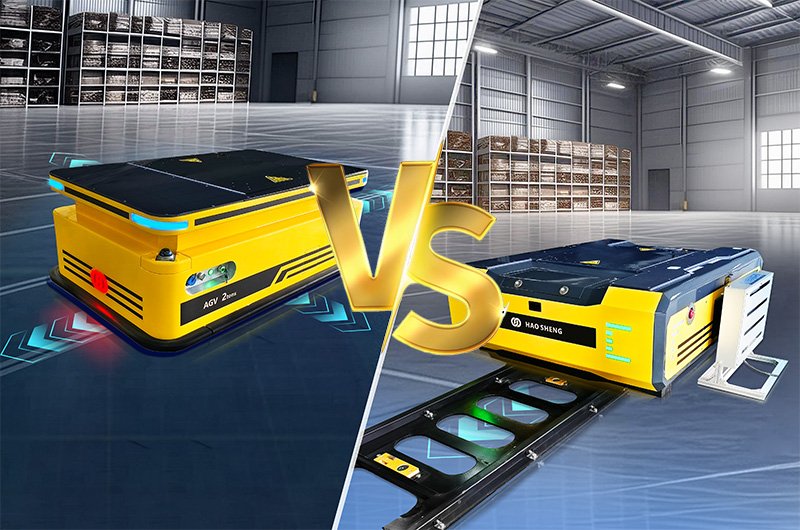
The rapid evolution of industrial automation forces global manufacturers to evaluate their internal logistics infrastructure with increasing scrutiny. Selecting the correct transport technology directly impacts production throughput, facility safety, and long-term operational costs. Two primary technologies dominate the heavy-load sector: Automated Guided Vehicles (AGV) and Rail Guided Vehicles (RGV). While both systems automate material movement, they offer fundamentally different advantages depending on the specific operational environment. HENSEN AGV serves as a Leading Heavy-Duty Logistics Solutions Provider by diagnosing complex bottlenecks and deploying the most effective hardware for diverse industrial needs. Hangzhou Haosheng Electric Vehicles Co., Ltd. provides a deep portfolio of both trackless and rail-bound units to ensure optimal performance. This technical overview examines the functional differences between these systems to help decision-makers identify the best fit for their unique facility requirements.
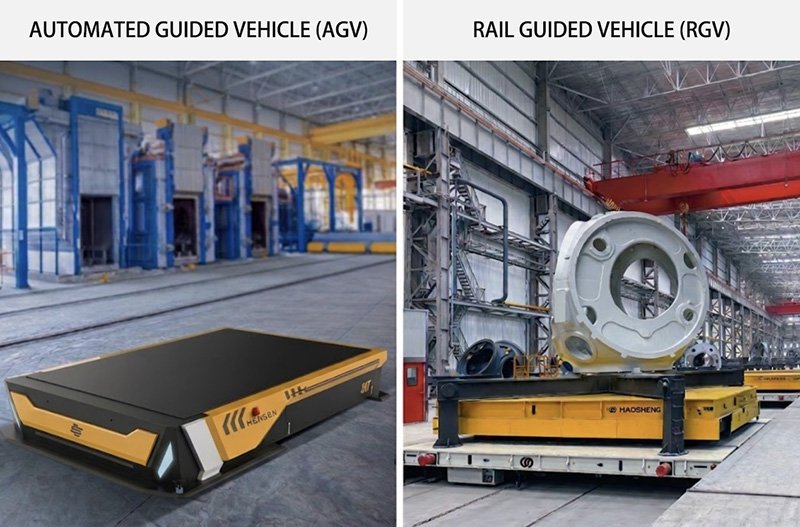
The Power of Constraint: When RGV Is the Superior Choice
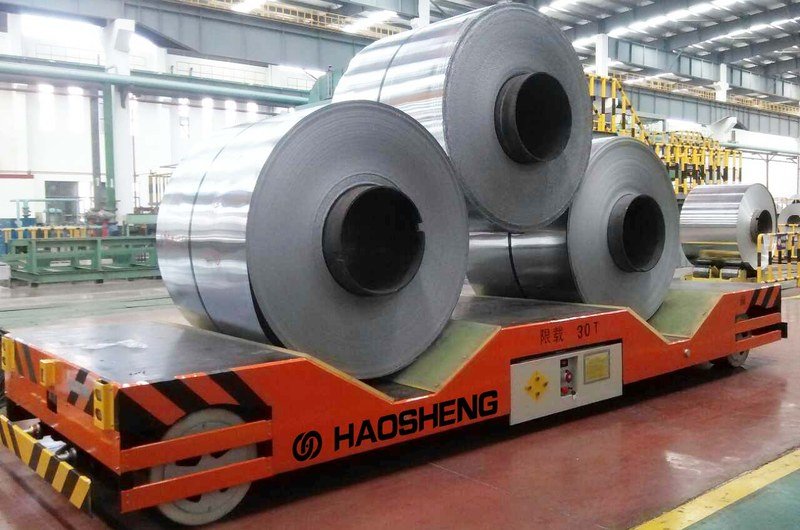
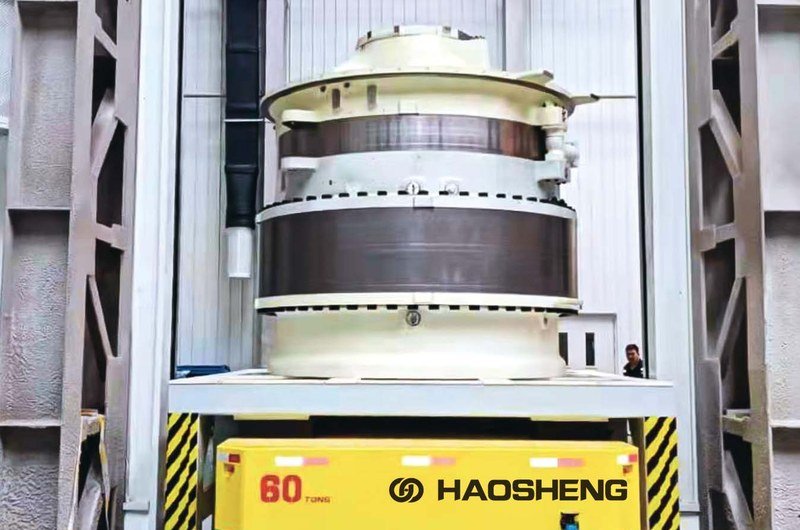
Rail Guided Vehicles represent a specialized class of automation that excels in high-frequency, linear transport applications. Unlike autonomous units, an RGV operates on a fixed track, which provides unmatched stability for heavy-load cycles. This technology is particularly effective in environments where the production path remains constant over long periods. For example, wind power manufacturing requires the movement of massive components through highly controlled coating lines. HENSEN AGV (Hangzhou Haosheng Electric Vehicles Co., Ltd.) has successfully deployed 135-ton intelligent RGV sub-mother car systems for such energy-sector applications. The rail-bound nature of these vehicles ensures perfect alignment with stationary spray equipment and curing ovens.
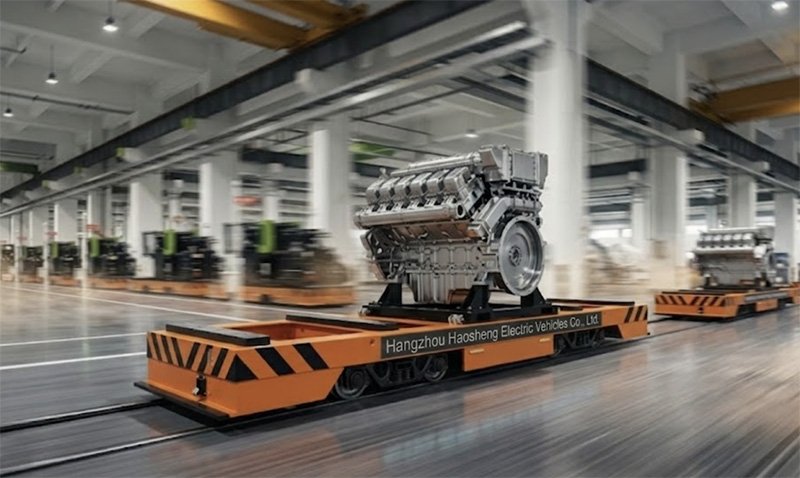
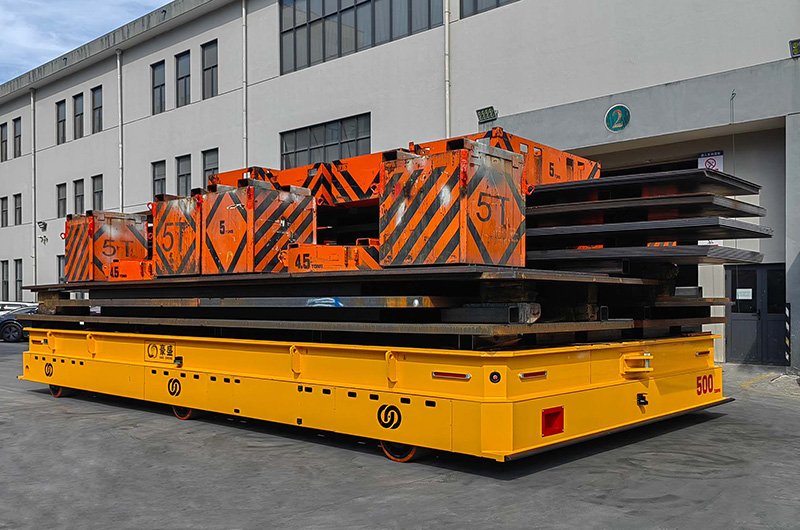
The primary advantage of RGV technology lies in its mechanical simplicity and high-speed reliability. Because the vehicle follows a fixed rail, it requires less sophisticated onboard sensors for obstacle detection compared to trackless units. This simplicity often translates into lower maintenance costs and higher uptime in harsh industrial zones. In tunneling segment production lines, RGV systems manage the continuous flow of heavy concrete sections with synchronized precision. These vehicles can maintain stable and continuous operation even when carrying hundreds of tons, provided the track is clear. For facilities that prioritize maximum throughput over path flexibility, the rail-guided approach offers a robust and predictable logistical spine. Consequently, RGV remains the gold standard for repetitive, straight-line heavy transport.
The Freedom of Navigation: AGV’s Role in Dynamic Layouts
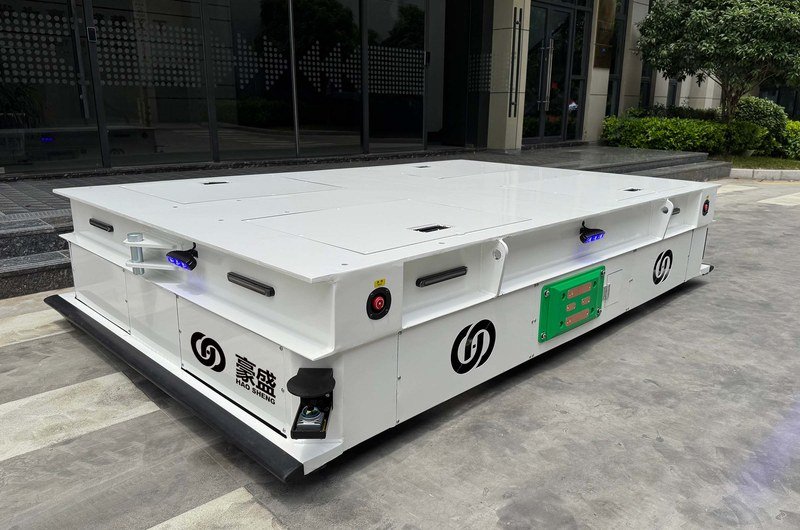
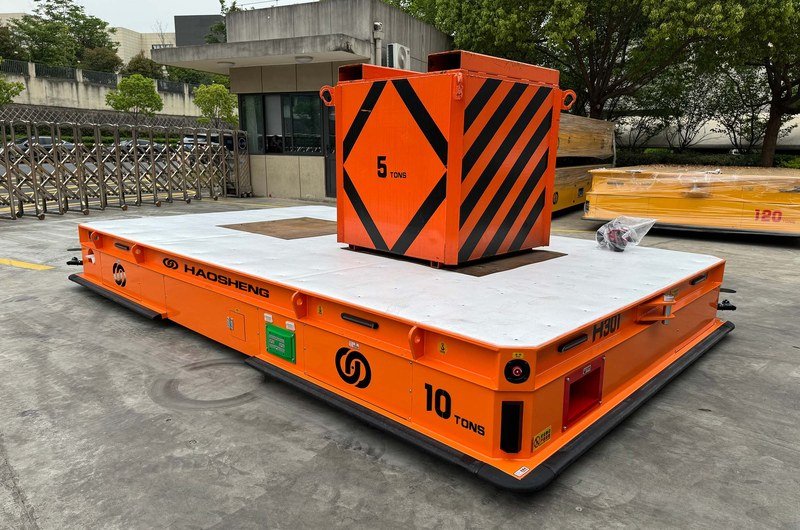
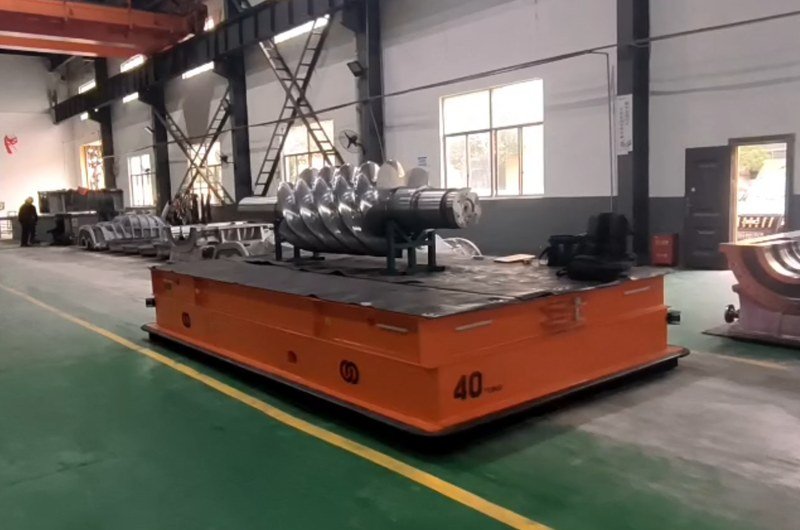
While RGV systems thrive on consistency, Automated Guided Vehicles offer the flexibility necessary for complex and evolving workshop layouts. Modern AGVs do not require physical rails or floor markers, allowing them to navigate across different factory sections seamlessly. HENSEN AGV (Hangzhou Haosheng Electric Vehicles Co., Ltd.) utilizes second-generation Magnetic Strip, 3D SLAM, and RTK hybrid navigation to achieve this autonomy. This technology allows vehicles to build digital maps of their surroundings and navigate without infrastructure modifications. Such flexibility is essential for manufacturing plants that frequently update their production lines or handle diverse product types.
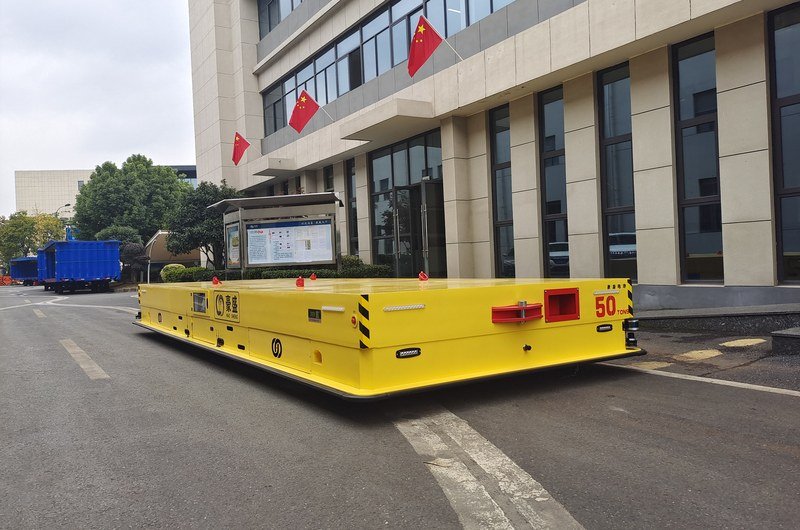
The mobility of an AGV extends beyond simple forward and backward movement. Advanced motion models allow these vehicles to perform lateral shifts, diagonal travel, and spin-on-the-spot rotations. This omnidirectional capability is a game-changer for facilities with tight aisles or confined loading zones. For instance, a 25-ton high-speed outdoor AGV can transition from a narrow indoor warehouse to an open outdoor yard while avoiding obstacles in real-time. This adaptability ensures that the vehicle does not become obsolete if the factory layout changes in the future. By eliminating the need for tracks, the AGV model reduces the initial construction burden on the facility floor. Therefore, enterprises seeking long-term scalability and versatile material flow often favor the trackless AGV approach.
Technical Synergy: Comparing Motion Models and Precision
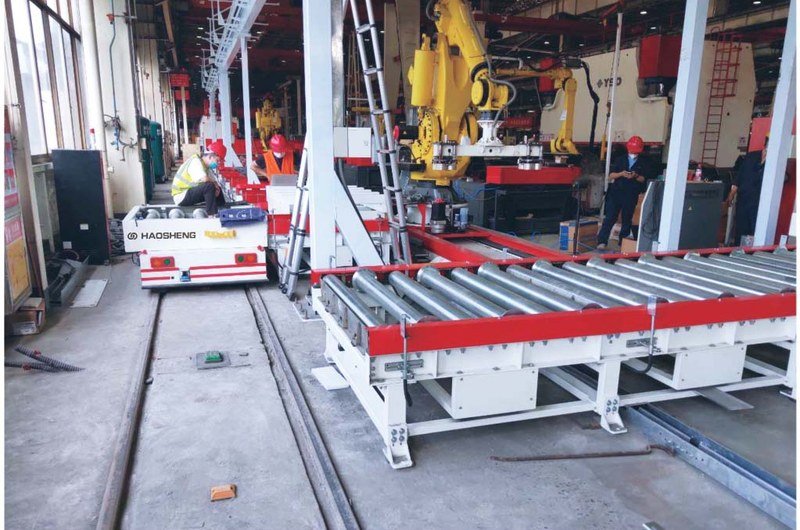
Comparing the technical specifications of AGV and RGV systems reveals a convergence in precision despite their differing navigation methods. Both systems developed by Hangzhou Haosheng Electric Vehicles Co., Ltd. maintain a positioning accuracy of approximately ±10 millimeters. In an RGV, this precision comes from mechanical stops and high-resolution encoders on the rail. In an AGV, it stems from sophisticated sensor fusion and real-time algorithmic adjustments. This high degree of accuracy allows both vehicle types to dock perfectly with automated production machinery or palletizers. Furthermore, safety remains a shared priority, with both systems utilizing laser sensing ranges of up to 10 meters to prevent collisions.
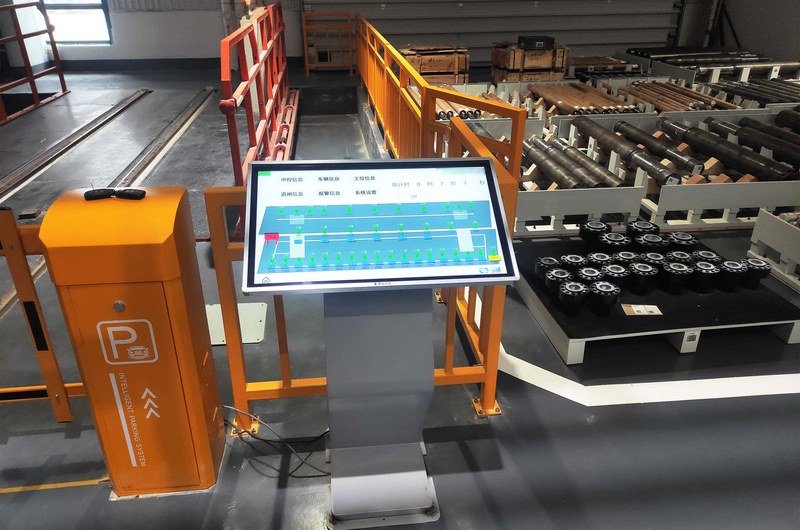
The scaling capacity of these technologies also demonstrates the manufacturer’s engineering depth. The range of solutions extends from 3-ton intelligent carriers for injection molding lines to massive 600-ton ultra-heavy-duty transporters. While an RGV might be more efficient for the 600-ton load in a straight line, an AGV provides better value for the 3-ton system in a busy, multi-machine shop. Additionally, both systems integrate with a proprietary scheduling system that acts as the digital brain of the operation. This software ensures that every unit—whether on rails or trackless—communicates with the facility’s ERP and MES systems. This synergy between mechanical power and digital control ensures that the chosen solution enhances the overall intelligence of the factory.
Calculating ROI: Flexibility vs. Throughput
Calculating the return on investment (ROI) for these technologies requires a balance between initial capital expenditure (CAPEX) and long-term operational efficiency. RGV systems typically involve higher infrastructure costs due to the need for rail installation and potential floor modifications. However, they often offer a lower cost per unit due to their more simplified vehicle body structure, sensing equipment, and maintenance and usage costs. Conversely, AGVs have higher unit costs because of their complex chassis, sensors, and navigation computers. Yet, they save money by avoiding the installation of permanent tracks and offering the ability to re-task the vehicle easily.
Future-proofing the facility is another critical factor in the ROI equation. An AGV can be redeployed to a different building or a new production line with only a software update. This makes it a more resilient investment for industries undergoing rapid digital transformation. On the other hand, the RGV remains the most cost-effective choice for stable, high-volume production where the logistics logic is unlikely to change for several years. HENSEN AGV (Hangzhou Haosheng Electric Vehicles Co., Ltd.) assists clients by simulating different logistical scenarios to determine which system offers the best payback period. By analyzing the frequency of moves, the complexity of the path, and the weight of the load, the provider ensures a data-driven selection process.
In conclusion, neither AGV nor RGV is universally superior; the ideal choice depends on the specific constraints and goals of the facility. RGV systems provide the heavy-duty reliability and high speed needed for fixed production cycles, such as in wind power or tunneling. Meanwhile, AGVs offer the omnidirectional agility and intelligent navigation required for modern, dynamic manufacturing environments. HENSEN AGV continues to lead the industry by providing a comprehensive suite of both technologies, backed by proprietary scheduling software and robust mechanical engineering. Hangzhou Haosheng Electric Vehicles Co., Ltd. remains committed to helping global industrial partners find the precise balance between flexibility and throughput. By selecting the right tool for the task, enterprises can ensure a safer, more efficient, and future-ready logistical infrastructure.
For more information regarding heavy-duty AGV and RGV solutions, contact us now!

Leave a comment