Join HENSEN at the LET-a CeMAT Guangzhou Logistics Exhibition (June 3-5)

May 29, 2026

Join-HENSEN-at-the-LET-a-CeMAT-Guangzhou-Logistics-Exhibition

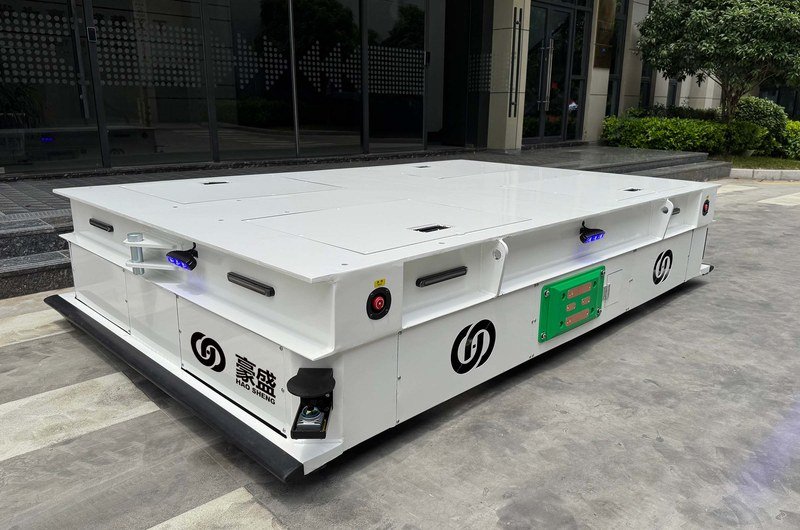
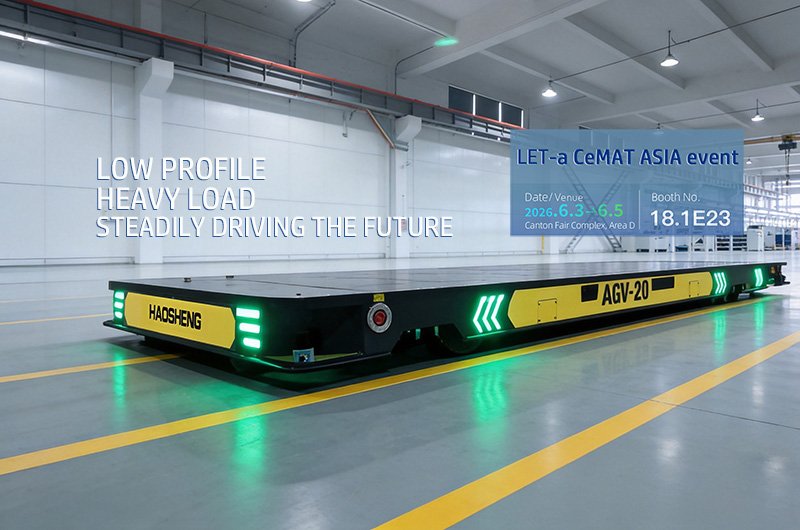
Low Profile, Heavy Load, Steadily Driving the Future — HENSEN Ultra-Low Profile AGV Makes Its Debut!

Are you still struggling with heavy-duty material handling in low-clearance spaces? With 20 years of expertise in intralogistics, HENSEN is about to unleash its latest masterpiece!

Lower. Stronger. Smarter!

With an overall height of just 245mm, this AGV can steadily carry a massive 20-ton payload. It navigates precisely through low-clearance workstations, redefining the standard for heavy-duty handling.

More Stable. More Accurate. Safer!

Equipped with 3D SLAM navigation and our self-developed heavy-duty differential steering wheels, combined with multiple safety protections, it ensures every transport mission is executed with pinpoint accuracy.

Breaking Height Limits, Carrying Infinite Possibilities!

Tailored for low-clearance industrial scenarios such as transformers, energy storage, and wind power, how will this precision heavy-duty solution stun the audience?

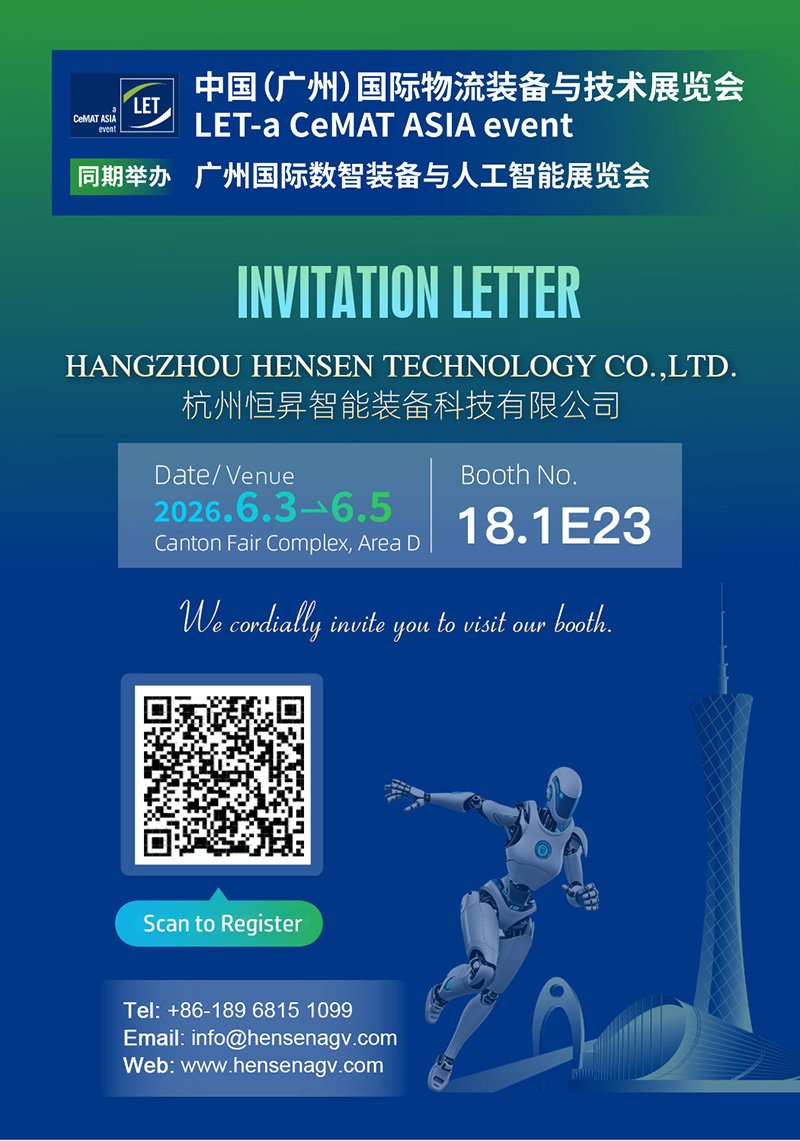
June 03-05  LET-a CeMAT ASIA event

Booth 18.1E23, Area D, Canton Fair Complex, Guangzhou

HENSEN invites you to witness it in person. See you there!
You May Also Like

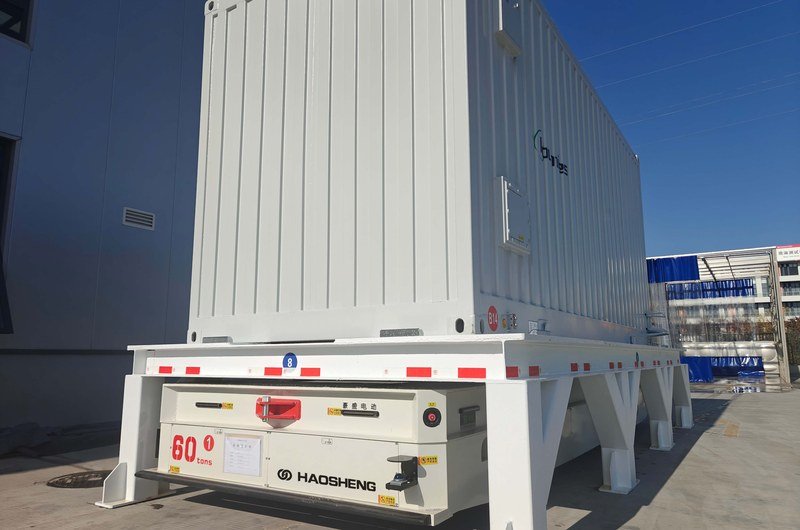
Heavy-Duty AGVs for Energy Storage: Container and Battery Cabinet Handling

Heavy-Duty AGVs for Energy Storage: Container and Battery Cabinet Handling

November 9, 2026

Battery energy storage is one of the fastest-scaling manufacturing sectors in the world, and its factories have a material handling problem that almost no other industry shares: the finished product is a fully built container or cabinet packed with battery modules — enormous, heavy, expensive, and sensitive to shock. It has to move from assembly

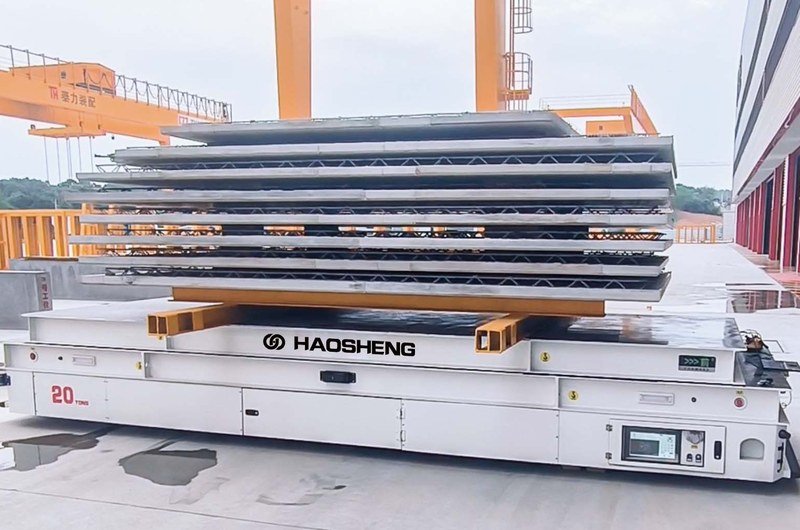
Precast Concrete AGVs: Automating PC Component Logistics in Prefab Plants

Precast Concrete AGVs: Automating PC Component Logistics in Prefab Plants

October 30, 2026

Walk through most precast concrete plants and you will find the same bottleneck: the overhead crane. It strips molds, it turns panels, it stacks finished units — and in between, it is asked to carry every wall panel, floor slab and stair flight from the curing area to the storage yard. Production waits while the

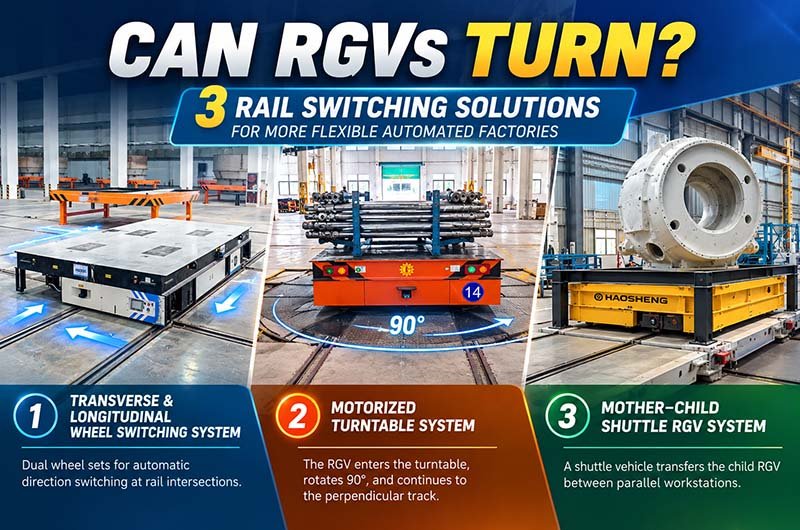
How Can RGVs Change Direction? 3 Rail Switching Solutions for Automated Factories

How Can RGVs Change Direction? 3 Rail Switching Solutions for Automated Factories

October 23, 2026

An RGV (rail-guided vehicle) follows fixed tracks—but that does not mean it can only travel back and forth along one straight line. When production areas meet at perpendicular intersections or when several parallel workstations need to be connected, engineers can design different ways for an RGV to change its route. At HENSEN, three commonly used

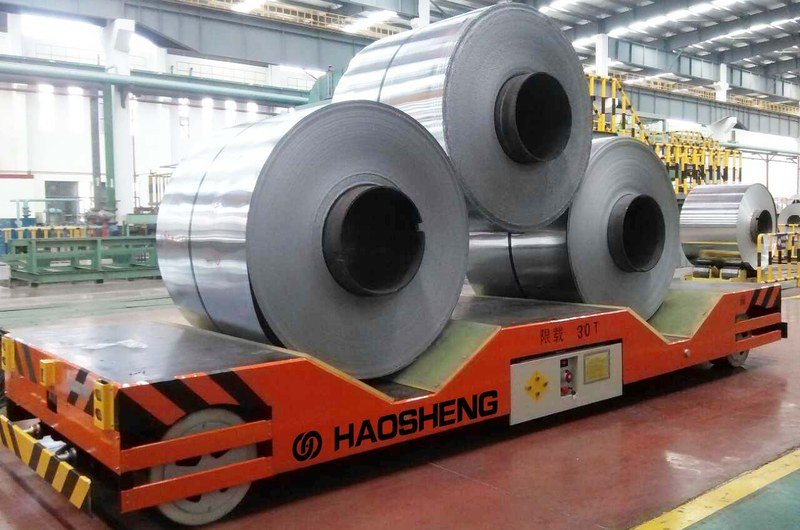
Steel Coil Transfer Cart: V-Deck Design, Capacities and Automation Options

Steel Coil Transfer Cart: V-Deck Design, Capacities and Automation Options

September 23, 2026

A steel coil is a wheel waiting for permission to roll. Set one on a flat deck and everything depends on chocks, straps and hope; the coil’s own geometry works against you for the entire journey. A steel coil transfer cart solves the problem at the source: a V-shaped deck cradles the coil so that

AGV + RGV Hybrid Systems: Combining Trackless Flexibility with Rail Precision

AGV + RGV Hybrid Systems: Combining Trackless Flexibility with Rail Precision

September 14, 2026

Most material flow questions get framed as a choice: AGV or RGV, trackless or rail. But walk through a real heavy-industry plant and the honest answer is often both. The main production line runs the same heavy route ten thousand times a year — a job rails were born for. Around it sit warehouses, outdoor

Under-Ride Lifting AGVs: How 40-60 Ton Loads Are Picked Up Automatically

Under-Ride Lifting AGVs: How 40-60 Ton Loads Are Picked Up Automatically

August 20, 2026

Moving a 50-ton fabrication normally means booking the overhead crane, waiting for it, rigging the load, and clearing everyone out from underneath. The crane is the busiest machine in the building, and every transport request joins its queue. An under-ride lifting AGV breaks that dependency: it drives beneath the load, jacks it straight up off

Roller-Deck AGVs and RGVs: Automating Line-to-Line Material Transfer

Roller-Deck AGVs and RGVs: Automating Line-to-Line Material Transfer

August 14, 2026

The last meter is where many automation projects quietly give up. An AGV or transfer cart delivers a pallet to the end of a production line — and then a forklift driver or two operators take over to move the load those final centimeters onto the line’s conveyor. The transport was automated; the transfer was

Heavy-Duty AGV Safety Systems: LiDAR, Bumpers, E-Stops and CE Compliance

Heavy-Duty AGV Safety Systems: LiDAR, Bumpers, E-Stops and CE Compliance

August 7, 2026

A heavy-duty AGV shares its aisles with people. A 60-ton vehicle cannot rely on being noticed, and it cannot stop the way a pedestrian steps aside — its safety has to be engineered into hardware that watches, warns, and stops the machine faster and more reliably than any human driver could. That hardware is what

Inside a 500-Ton AGV: Engineering Ultra-Heavy Automated Transport

Inside a 500-Ton AGV: Engineering Ultra-Heavy Automated Transport

July 29, 2026

Five hundred tons is the mass of a fully loaded jumbo jet, and an ultra-heavy AGV moves it across a factory floor with nobody on board, stopping within millimeters of its target. Vehicles in this class carry wind turbine nacelles, hydropower components, transformer bodies and ship blocks — loads that until recently only moved on

AGV Frame and Chassis Design for Heavy Loads: Why Structure Decides Reliability

AGV Frame and Chassis Design for Heavy Loads: Why Structure Decides Reliability

July 20, 2026

Two heavy-duty AGVs can carry identical brochure numbers — 50 tons capacity, laser navigation, millimeter-class stopping accuracy — and behave completely differently after three years of work. One still stops square at every station and lifts its load dead level. The other wanders off line, wears its wheels unevenly and needs its lifting hydraulics recalibrated

Next

Leave a comment