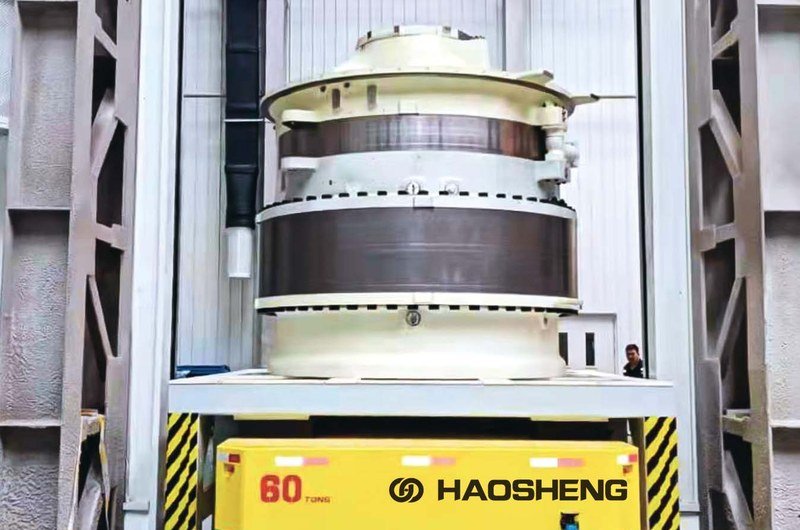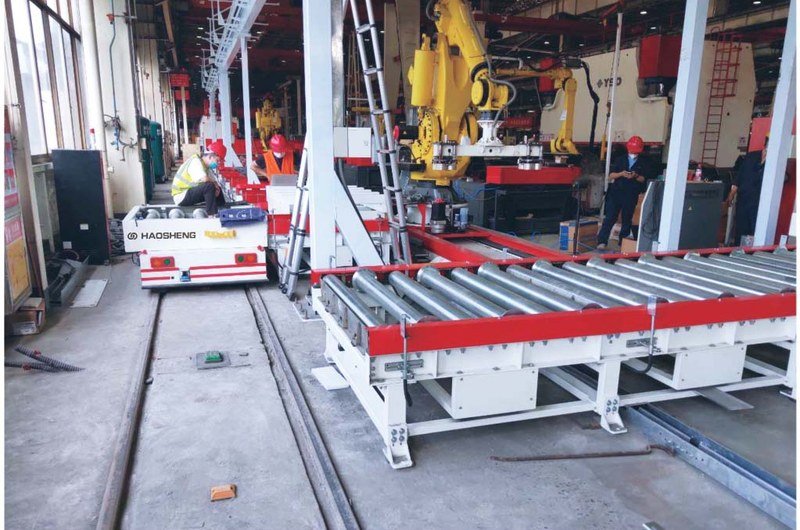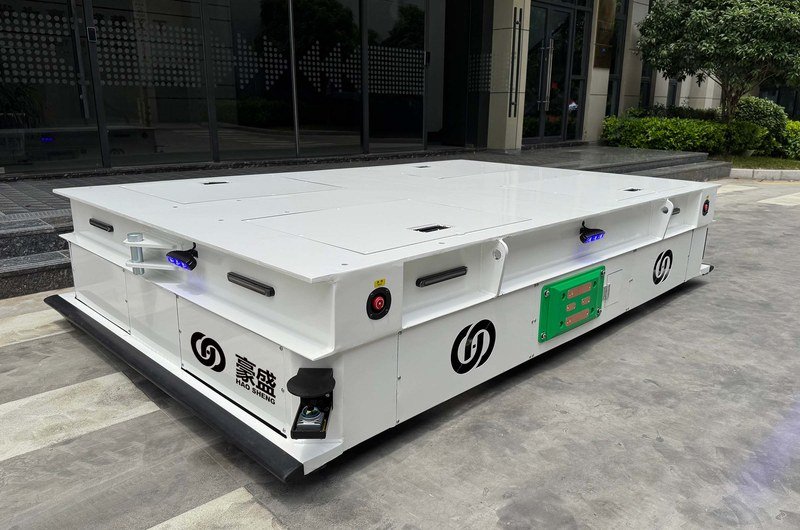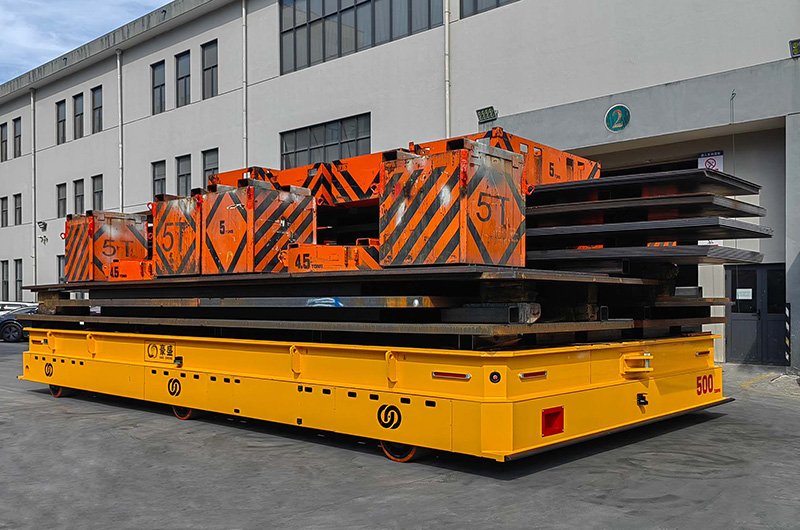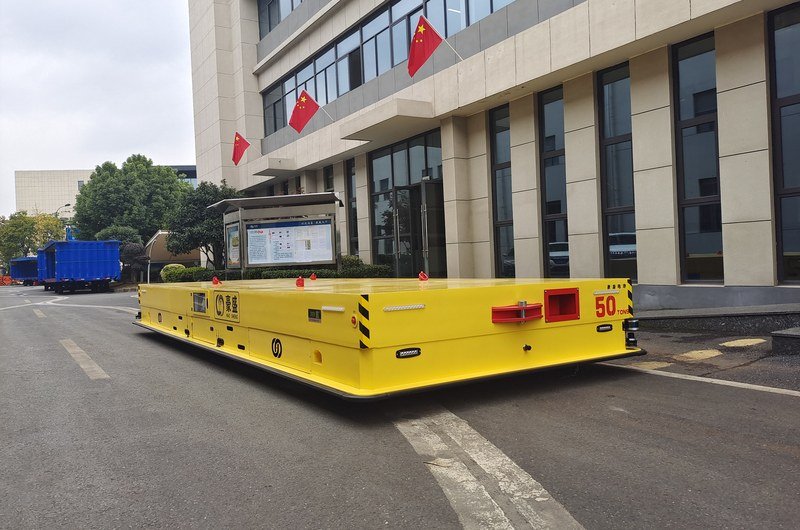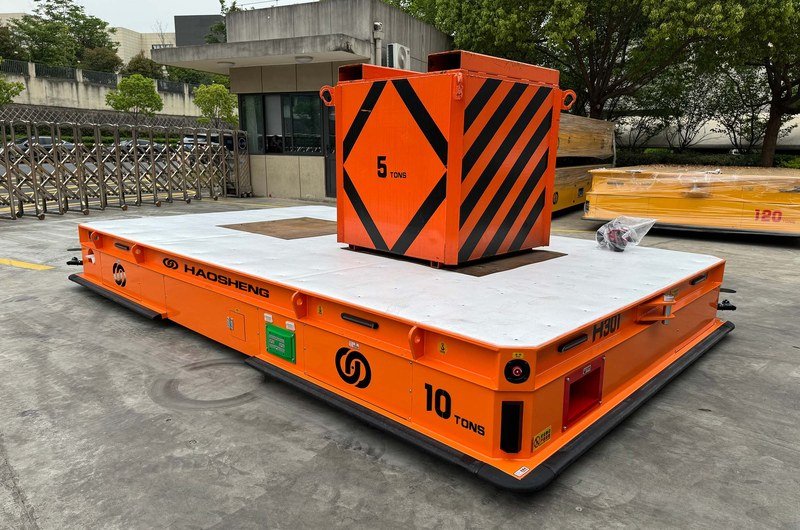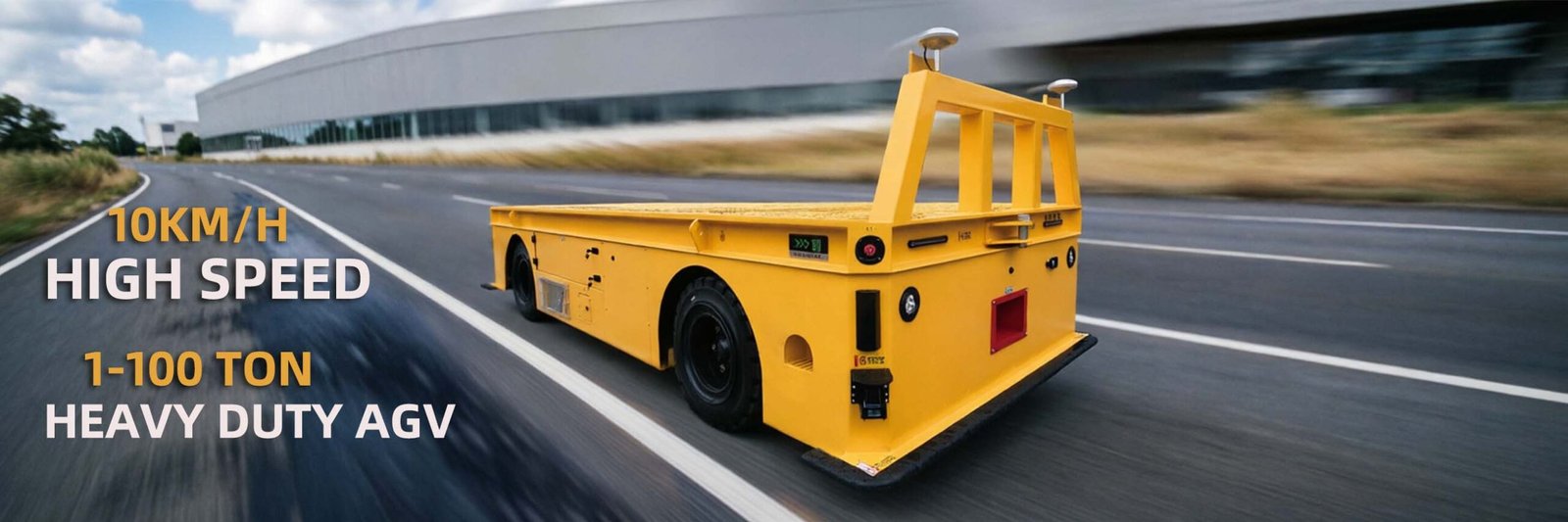
In industrial automation, heavy-duty AGVs (Automated Guided Vehicles) play a critical role in transporting large components, heavy equipment, and industrial materials.
However, traditional heavy-load AGVs have long faced a common limitation:
High load capacity, but very low operating speed.
For safety and stability, most heavy-duty AGVs operate at only 1.5–2 km/h, which restricts their use in large industrial environments such as:
- Large manufacturing campuses
- Port terminals
- Aerospace production facilities
- Heavy equipment plants
As a result, many factories still rely on diesel-powered transport vehicles for long-distance material movement.
Recent developments in industrial vehicle engineering are beginning to challenge this limitation.
A new generation of high-speed heavy-duty AGV systems demonstrates that heavy-load automated transport can achieve both high capacity and higher operational efficiency.
Why Speed Matters in Heavy-Duty AGV Logistics
Speed is one of the most important factors affecting logistics throughput.
In large industrial environments, transport distances between workshops, warehouses, and assembly areas can reach several kilometers.
When vehicles move slowly:
- More vehicles are required
- Operational costs increase
- Traffic management becomes complex
- System scalability becomes limited
Conventional heavy-duty AGVs typically operate at:
1.5–2 km/h
New high-speed designs can reach:
Up to 10 km/h
This represents a five to six times increase in transport efficiency, allowing fewer vehicles to complete the same workload.
For large facilities, this improvement can significantly reduce:
- Fleet size requirements
- Energy consumption
- Overall logistics costs
Load Capacity: From 2 Tons to 100 Tons
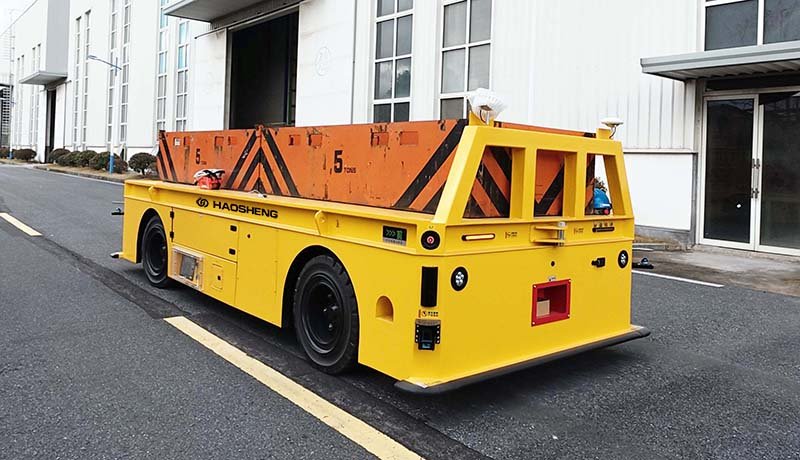
Heavy-duty AGVs are designed to transport materials that are far beyond the capacity of warehouse robots.
Typical applications include:
- Steel components
- Wind power equipment
- Aircraft assemblies
- Industrial molds
- Heavy machinery structures
Modern heavy-duty platforms can support loads ranging from:
2 tons to 100 tons or more These systems are designed specifically for industrial manufacturing logistics, rather than warehouse picking or parcel handling.
Hybrid Navigation: Combining 3D SLAM and RTK Positioning
Operating heavy-duty AGVs at higher speeds requires extremely accurate navigation.
Outdoor industrial environments are complex and constantly changing. A single navigation technology often cannot provide sufficient reliability.
A hybrid approach combining 3D SLAM laser navigation and RTK satellite positioning is increasingly used.
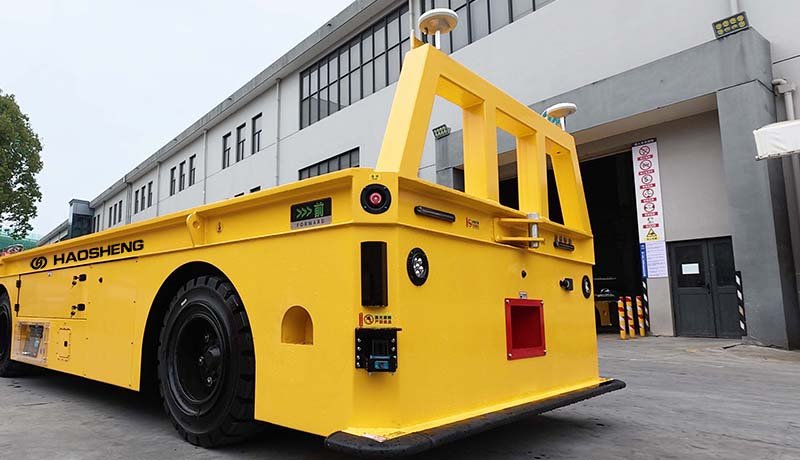
3D SLAM Laser Navigation
Multi-line LiDAR sensors scan the surrounding environment and build a three-dimensional map of the operating area.
This allows the vehicle to:
- Detect reference objects
- calculate its position in real time
- maintain stable navigation even in complex environments.
RTK Satellite Positioning
RTK (Real-Time Kinematic) technology enhances satellite positioning accuracy.
It provides centimeter-level positioning precision in open outdoor environments such as:
- logistics yards
- industrial campuses
- port areas
Hybrid Navigation Benefits
By combining both technologies:
- SLAM handles local environmental mapping
- RTK provides absolute positioning accuracy
This dual system ensures that the vehicle maintains precise positioning even during high-speed outdoor operation.
Multi-Sensor Safety Architecture
As operating speed increases, safety becomes even more critical.
Heavy-duty AGVs transporting large loads must detect obstacles quickly and respond reliably.
Modern systems typically integrate multiple sensing technologies to create 360-degree safety coverage.
Laser Obstacle Detection
Laser safety scanners are installed diagonally on the vehicle body.
They continuously monitor the surrounding area and detect both:
- static obstacles
- moving objects
Millimeter-Wave Radar
Millimeter-wave radar sensors are installed at the front and rear of the vehicle.
These sensors can detect obstacles even in challenging weather conditions such as:
- rain
- fog
- dust
Vision Monitoring
Cameras provide additional visual monitoring and support:
- real-time remote observation
- event recording
- data transmission
Together, these sensors create a redundant perception system that improves operational safety.
Chassis Design for Outdoor Industrial Environments
Outdoor heavy-duty AGVs must operate on various road surfaces, including:
- asphalt
- concrete
- gravel
- uneven industrial pavement
Chassis durability is therefore a key design factor.
Solid Rubber Engineering Tires
For outdoor applications, solid rubber tires are often used instead of polyurethane wheels.
Advantages include:
- puncture resistance
- long service life
- minimal maintenance
- reduced risk of road surface damage
These characteristics make them suitable for demanding industrial environments.
Structural Engineering for Extreme Loads
Transporting loads up to 100 tons requires robust structural design.
Heavy-duty AGV frames are typically constructed from high-strength industrial steel profiles and optimized using finite element analysis (FEA).
Design standards may include:
- deformation under 1.1× rated load ≤ L/1000 (L = wheelbase)
- safety factor ≥ 1.2
These engineering parameters ensure that the vehicle frame maintains structural integrity even under high load and dynamic movement.
Applications for High-Speed Heavy-Duty AGVs
High-speed heavy-duty AGVs are particularly valuable in environments where both long transport distances and large loads are present.
Typical applications include:
- large industrial parks
- shipbuilding facilities
- wind energy manufacturing plants
- aerospace assembly sites
- port logistics yards
In these scenarios, automated vehicles capable of traveling up to 10 km/h can significantly improve logistics efficiency.
The Future of Outdoor Autonomous Industrial Transport
As industrial automation continues to evolve, heavy-duty AGVs are expanding beyond indoor factory logistics.
Advances in:
- hybrid navigation
- sensor fusion
- structural engineering
- autonomous control systems
are enabling automated vehicles to operate safely and efficiently in large outdoor environments.
This development represents an important step toward fully automated industrial logistics ecosystems.