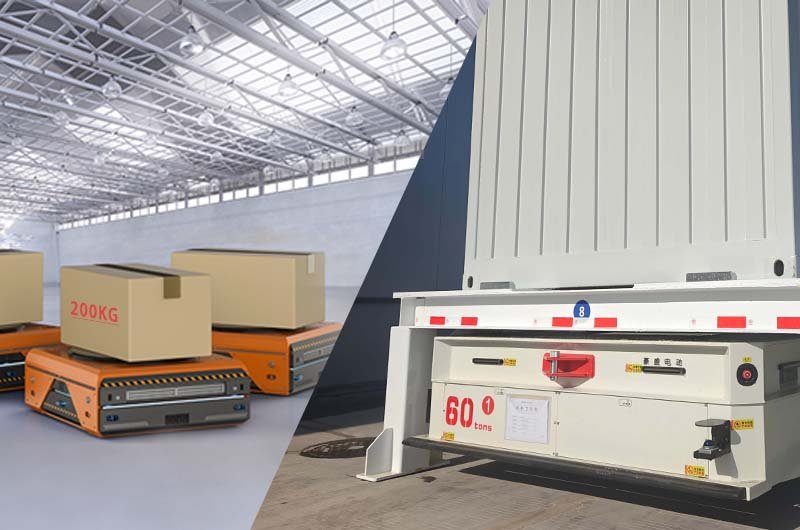
A Practical Guide for Industrial Buyers (with Market Structure Analysis)
In modern smart manufacturing, AGVs (Automated Guided Vehicles) have become a standard solution for factory automation and internal logistics.
However, when selecting a system, many decision-makers encounter confusing terminology:
• Magnetic navigation
• QR code navigation
• Laser SLAM
• Differential drive
• Mecanum wheels
• AGV vs. AMR
• Light-duty vs. heavy-duty AGV
This article explains the technical differences and, more importantly, clarifies a critical misconception:
A light-duty AGV designed for a few hundred kilograms is fundamentally different from a heavy-duty AGV designed for several tons — or even hundreds of tons.
They are not simply variations of the same machine. They belong to different engineering categories.
1. What Is an AGV? What Is an AMR?
An AGV (Automated Guided Vehicle) is a mobile platform equipped with guidance systems such as magnetic, optical, or laser-based navigation. It follows predefined paths and includes safety protection and load-handling functions.
In recent years, the term AMR (Autonomous Mobile Robot) has become widely used.
An AMR (Autonomous Mobile Robot):
• Perceives its environment in real time
• Avoids obstacles dynamically
• Uses onboard sensors for localization
• Plans routes autonomously
In practice, the boundary between AGV and AMR has become less distinct. Many modern AGVs integrate SLAM, obstacle avoidance, and dynamic routing. In industrial discussions, AMR is often considered an advanced evolution of traditional AGV systems.
2. AGV Navigation Technologies: Which Fits Your Factory?
Navigation technology determines flexibility, intelligence level, and infrastructure requirements.
Below are the most common industrial navigation methods.
2.1 Magnetic Strip Navigation
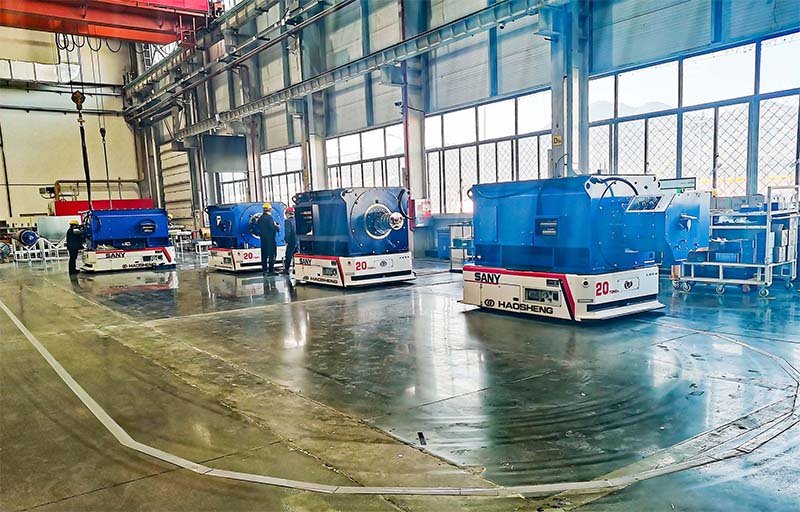
Principle:
The vehicle follows magnetic strips embedded in or attached to the floor.
Advantages:
- Low cost
- Simple implementation
- Reliable in fixed environments
Limitations:
- Fixed routes
- Requires floor modification
- Limited flexibility
- No true dynamic obstacle planning
Best suited for:
Legacy workshops with stable layouts and a limited budget.
2.2 QR Code Navigation
Principle:
The vehicle uses cameras to read floor-mounted QR codes for positioning, combined with inertial navigation.
Advantages:
- Flexible path planning
- Easy deployment
- Suitable for light manufacturing and e-commerce warehouses
Limitations:
- Requires regular maintenance of floor markers
- Sensitive to dirt and surface wear
Companies such as Hikrobot and Geek+ are well known in light-duty warehouse robotics using similar localization technologies.
2.3 Laser Navigation (Reflector or Natural SLAM)
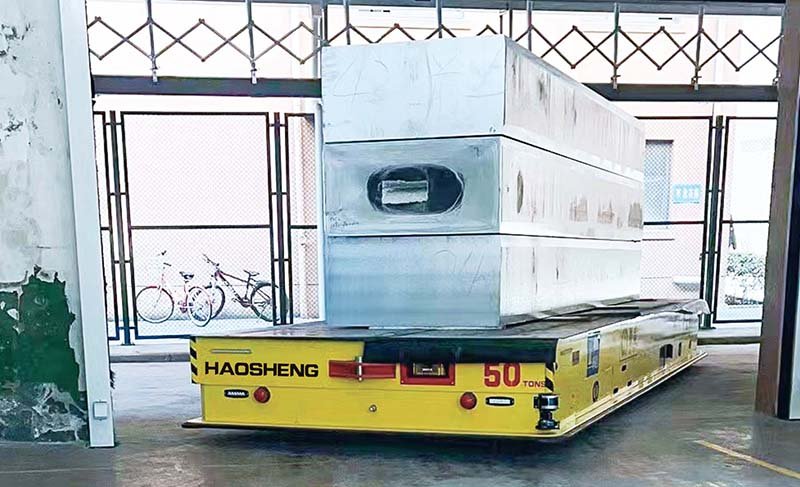
Principle:
A LiDAR sensor scans reflectors or natural environmental contours to calculate precise position through triangulation or SLAM algorithms. Click to view A 3D SLAM Navigation Case
Advantages:
- High positioning accuracy
- No need to modify floors
- Highly flexible routing
- Suitable for dynamic production lines
Limitations:
- Higher cost
- Greater system integration complexity
Laser SLAM is currently the preferred solution for high-mix, flexible manufacturing environments.
2.4 Vision / V-SLAM Navigation
Principle:
Uses cameras to interpret environmental features, similar to human vision.
Advantages:
- Strong long-term cost potential
- Infrastructure-free mapping
Limitations:
- Sensitive to lighting conditions
- Industrial robustness is still evolving
3. The Critical Divide: Light-Duty vs. Heavy-Duty AGV
After reviewing navigation technologies, an important pattern becomes clear:
Most well-known AGV brands focus primarily on loads under 1 ton. Why?
The heavy-duty AGVs (2 tons to hundreds of tons) represent an entirely different engineering discipline.
3.1 Engineering Differences
| Dimension | Light-Duty AGV | Heavy-Duty AGV |
| Load Capacity | <1–2 tons | 2–800+ tons |
| Core Challenge | Algorithms & fleet scheduling | Structural mechanics & drive systems |
| Mechanical Stress | Moderate | Extreme |
| Customization Level | Modular | Highly customized |
| Industry Focus | E-commerce, electronics | Aerospace, heavy equipment, steel, energy |
A 300 kg robot and a 300-ton transport platform cannot share the same design philosophy.
Heavy-duty systems must address:
- Structural deformation under extreme loads
- Drive torque matching
- Multi-motor synchronization
- Frame strength and fatigue resistance
- Redundant safety systems
- Load distribution engineering
Failure in heavy-load environments can result in severe financial and operational consequences. Therefore, reliability standards are significantly higher.
3.2 Market Structure: The 80/20 Reality
In the AGV market:
- Approximately 80% of companies compete in the light-duty segment
- Fewer than 20% specialize in heavy-duty industrial transport
Heavy-duty AGV manufacturing requires:
- Long-term mechanical engineering experience
- Deep materials science knowledge
- Custom project capability
- Proven industry case history
It is not simply a scaled-up light robot.
4. Heavy-Duty AGV Engineering in Practice
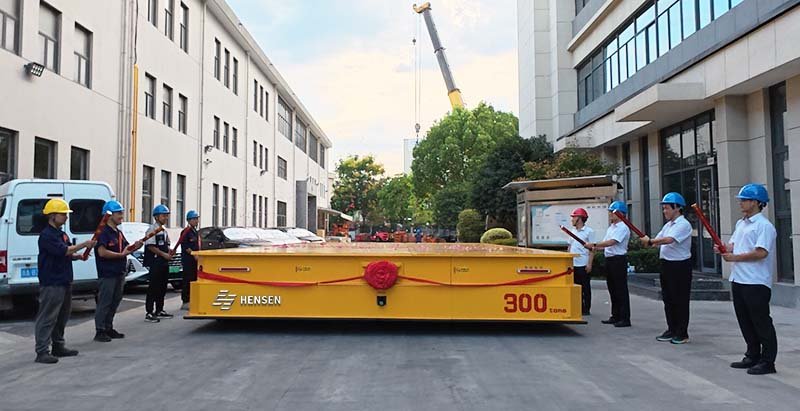
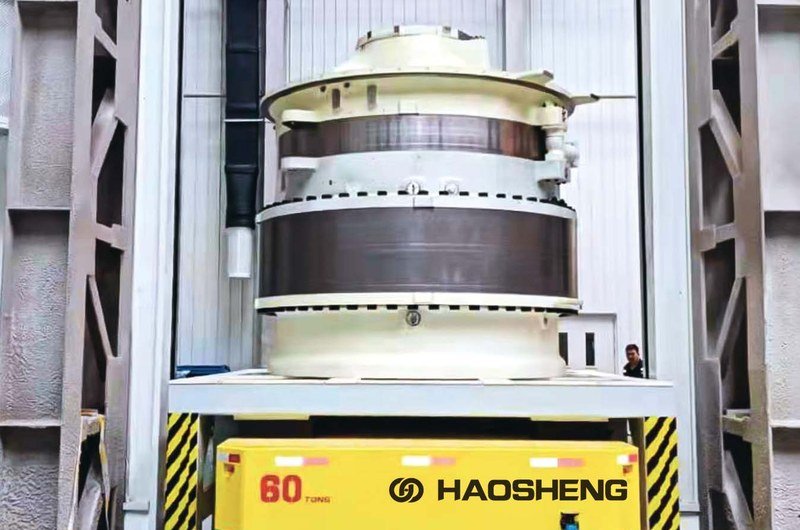
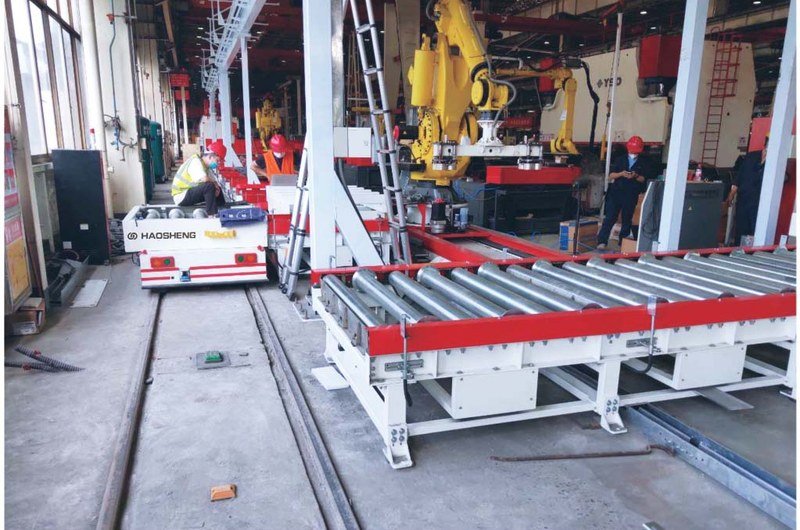
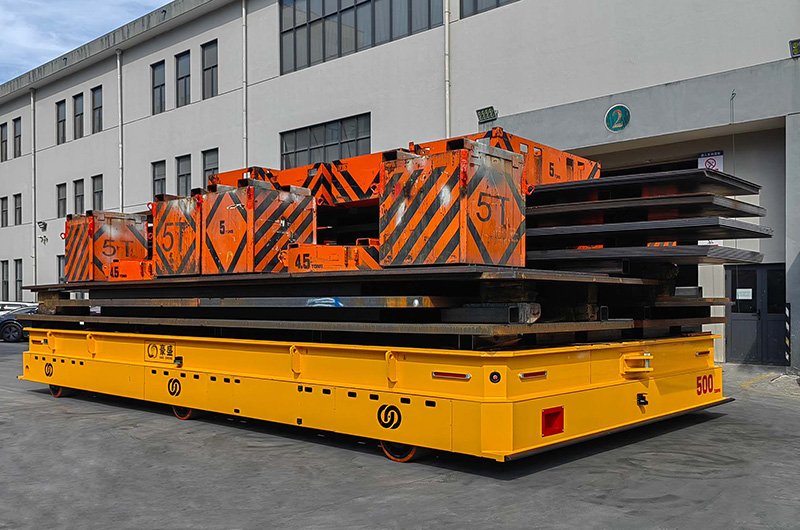
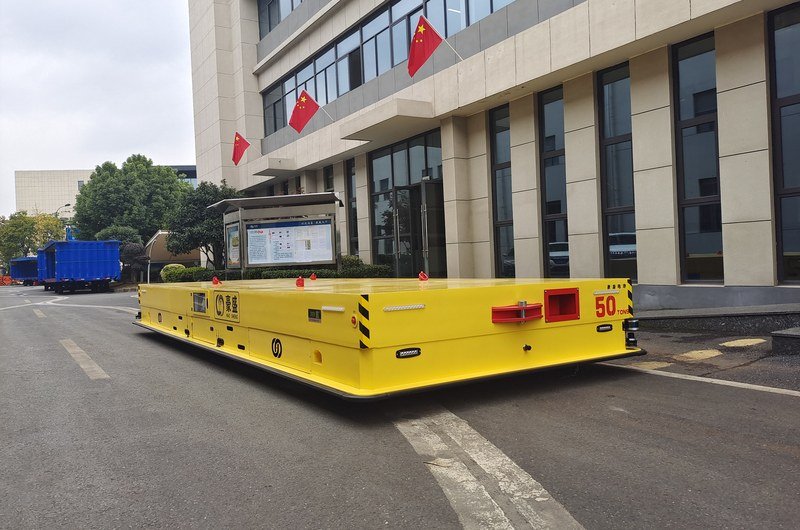
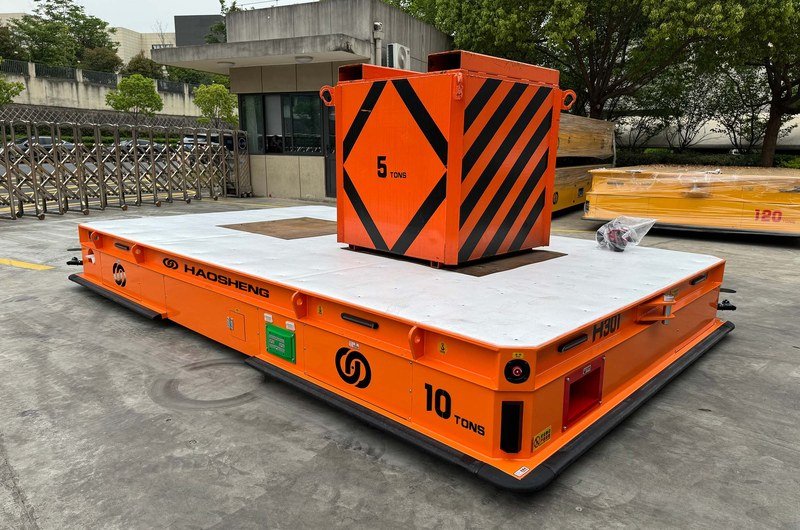
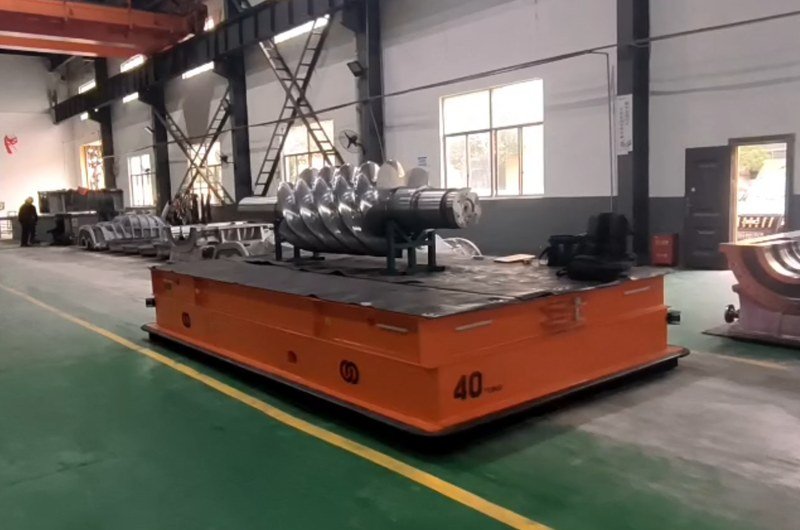
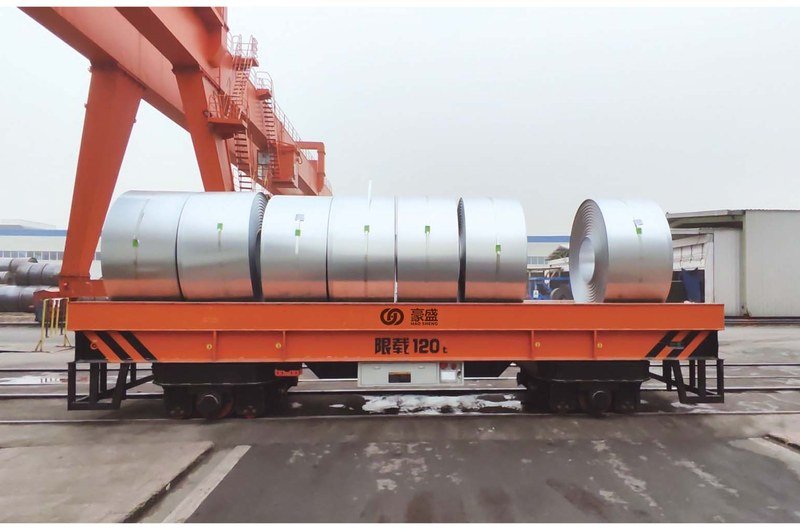
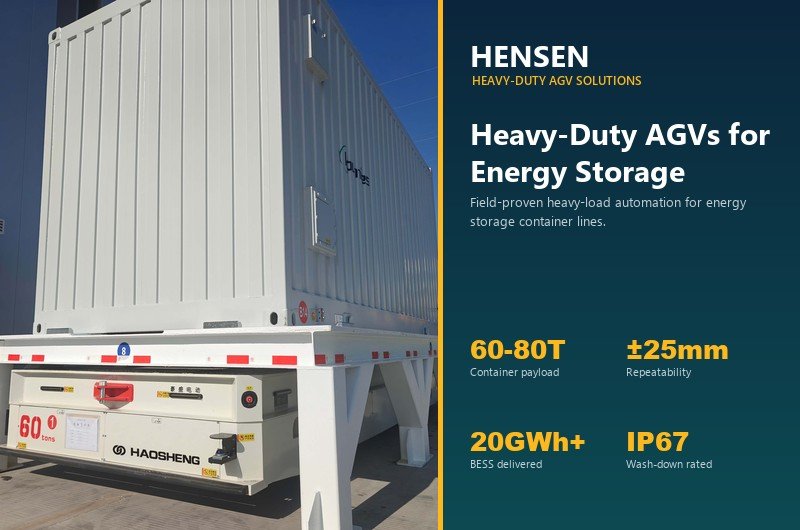
In China’s heavy-load industrial vehicle sector, companies such as HENSEN Technology Company specialize in heavy-duty transport platforms ranging from 2 tons to over 800 tons. Contact HENSEN to schedule a free consultation.
Unlike warehouse robotics providers, heavy-duty manufacturers typically:
- Focus on industrial plant logistics
- Provide project-based customization
- Integrate laser navigation, magnetic guidance, or hybrid systems
- Design structural platforms based on client load conditions
Heavy-duty AGVs are commonly used in:
- Aerospace assembly
- Wind energy equipment manufacturing
- Heavy machinery production
- Large structural component transport
- Mold handling
- Steel and shipbuilding industries
Each project often involves unique:
- Floor conditions
- Load center requirements
- Turning radius constraints
- Safety standards
- Communication protocols
As a result, no two heavy-duty AGVs are identical.
5. Key Considerations Before Choosing an AGV
Before selecting a solution, clarify:
- What is the maximum load (static and dynamic)?
- What is the load center height and distribution?
- Is future layout flexibility required?
- Is the environment clean, dusty, or high-temperature?
- What is the acceptable downtime risk?
- Do you require multi-vehicle fleet coordination?
Most importantly:
Are you solving a warehouse efficiency problem, or a heavy industrial transport challenge?
These require different suppliers and engineering capabilities.
Conclusion
AGV selection is not simply about navigation technology.
It is about matching the correct engineering platform to your load class and industrial risk level.
Light-duty AGVs dominate warehouse automation.
Heavy-duty AGVs enable core industrial manufacturing.
Understanding this distinction prevents costly misjudgments and ensures long-term system reliability.

Leave a comment