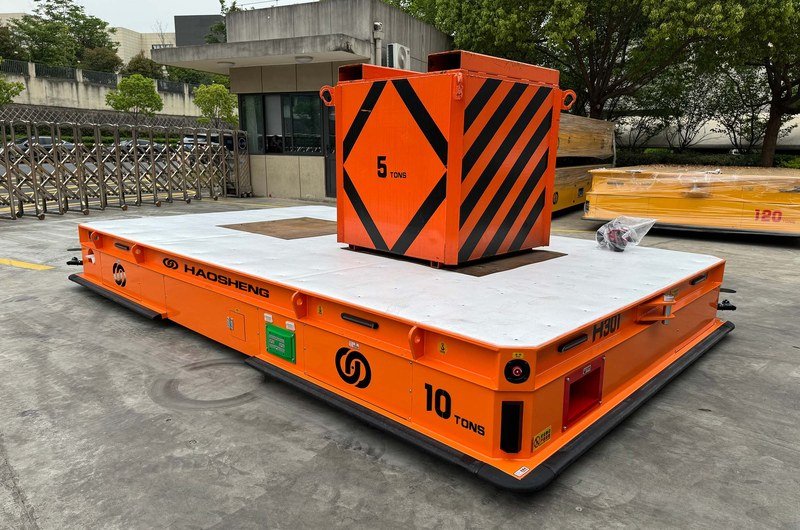
A heavy-duty AGV only earns money while it is moving. A 60-ton vehicle hauling dies, coils or machine bases can replace cranes and forklifts across three shifts — but every minute it spends parked at a charger is capacity you paid for and cannot use. On a small warehouse robot, charging is an afterthought. On a vehicle expected to work around the clock, the battery system is a core piece of engineering, specified as carefully as the frame or the drive.
This guide explains why lithium iron phosphate (LiFePO4) has become the standard chemistry, how automatic side-contact and floor-contact charging stations work, and how an opportunity charging strategy keeps a fleet running 24/7 without a dedicated charging shift. The same principles apply across the whole payload range, from 1-ton vehicles to 800-ton transporters.
Why Batteries Power Most Heavy-Duty AGVs
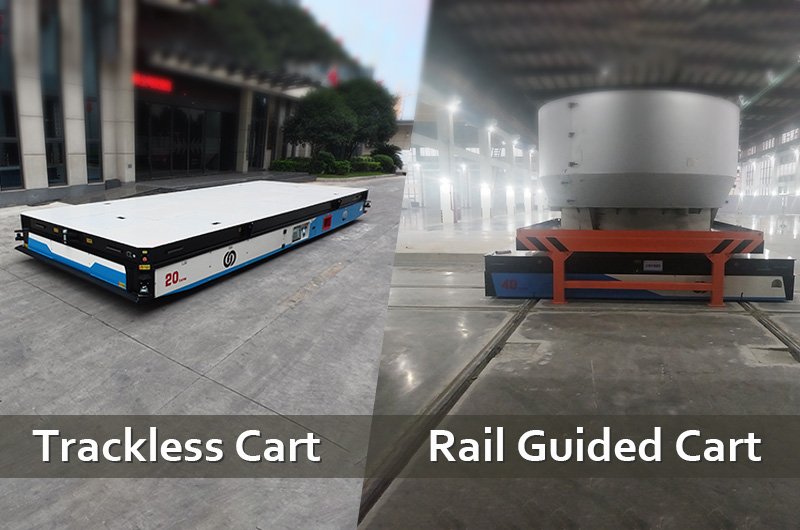
An AGV follows a virtual route defined in software, so it cannot draw power from fixed infrastructure the way a rail vehicle can. Rail-guided carts have three supply options — battery, AC36V conductor rail, or cable drag chain — compared in our RGV power supply guide. A free-roaming AGV has one: it must carry its energy with it. Industrial LiFePO4 packs are what made that practical, and they bring benefits no wired system can match:
- A completely clean floor — no rails, no trench, no busbar, no cable to protect or trip over.
- Routes that change with software, not civil work; new stations cost nothing in infrastructure.
- One vehicle can serve indoor and outdoor segments of a route without switching power systems.
- With automatic charging, no human ever handles the battery — the vehicle refuels itself.
Why LiFePO4 Is the Standard Chemistry
Almost every serious heavy-duty AGV built today carries a lithium iron phosphate pack — the result of three properties that match industrial vehicle duty better than lead-acid or other lithium chemistries.
Stability first
The iron phosphate cathode is chemically robust and thermally stable — which matters when the pack lives inside a steel chassis next to hydraulics and drive electronics in a dusty, vibrating plant. Compared with cobalt-based lithium chemistries, LiFePO4 tolerates industrial abuse with a far wider safety margin.
Charge behavior that suits opportunity charging
LiFePO4 accepts high charge currents and, critically, has no memory effect: it can be topped up in short, partial bursts whenever the vehicle happens to be idle, without damaging the pack. Its discharge curve is also flat, so the vehicle’s drive and lift performance stays consistent from a full pack down to a low one. These two traits are the foundation of 24/7 operation.
A service life that matches the vehicle
A well-built heavy-duty AGV is a 10–15+ year asset. LiFePO4 offers the longest cycle life of the mainstream chemistries, and unlike lead-acid, it needs no watering, no equalization charges, and no ventilated charging room. Plants that switched eliminated the spare-battery pool, the charging area, and manual battery changes in one step.
Automatic Charging Stations: How an AGV Refuels Itself
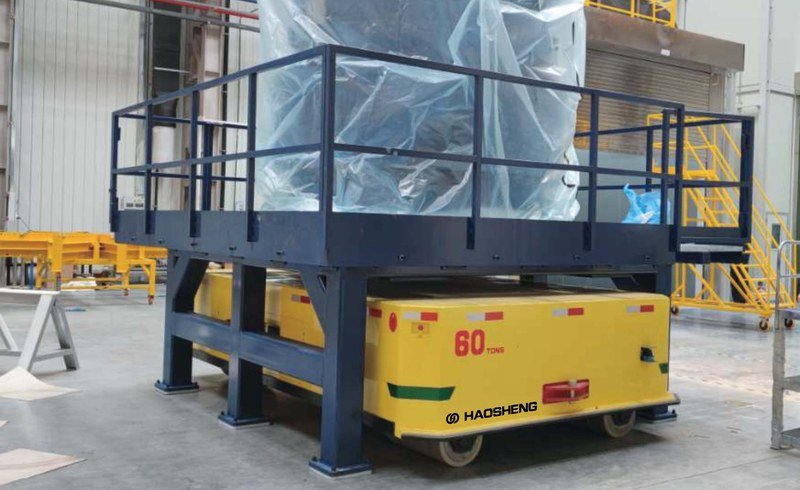
Automatic charging is what turns a good battery into a 24/7 power system. The vehicle carries charging contacts; the station carries the charger and a mating contact set; the scheduling system decides when they meet. Two physical arrangements dominate in heavy vehicles.
Side-contact charging
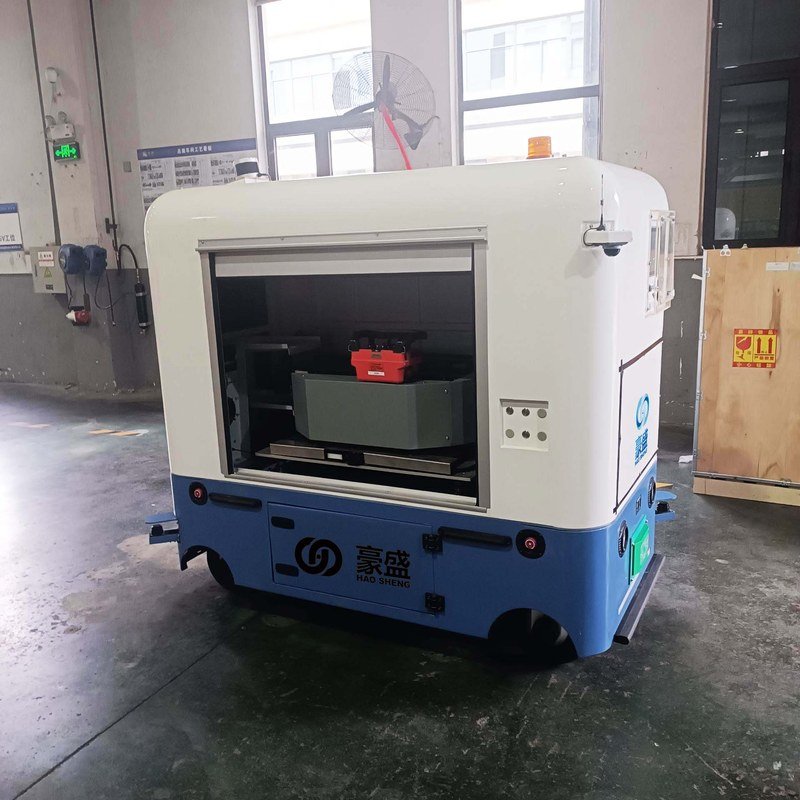
Contact plates sit on the side of the vehicle chassis, and the charging station stands beside the route with spring-loaded mating contacts. The AGV stops alongside, the contacts engage under spring pressure, and charging begins. Side charging is easy to retrofit and keeps all equipment above floor level, simple to inspect and service.
Floor-contact charging
Here, the contact plates sit in or on the floor, and contacts on the underside of the chassis press down to make the connection. Floor charging keeps aisles completely clear — nothing protrudes into the traffic lane — which suits narrow layouts and nose-in docking. The plates stay dead until the vehicle is verified in position, so the floor hardware is safe to walk over.
The docking and handshake sequence
Docking accuracy is not a problem in practice: 3D SLAM laser navigation positions a heavy AGV to roughly ±10–15 mm, and contact geometry carries generous tolerance beyond that. The safety logic matters more than the mechanics. Station contacts stay electrically dead until the vehicle reports it is stopped in position and the two controllers complete a handshake; only then does the charger close its contactor. Any fault — lost communication, contact resistance out of range, an e-stop — opens the circuit immediately. The sequence runs unattended, dozens of times a day.
Charging Strategy: Keeping a Fleet Running 24/7
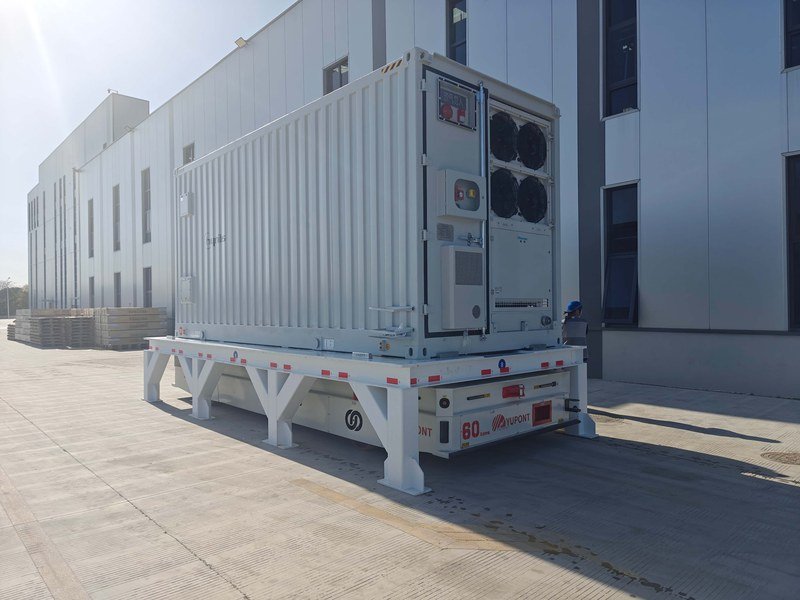
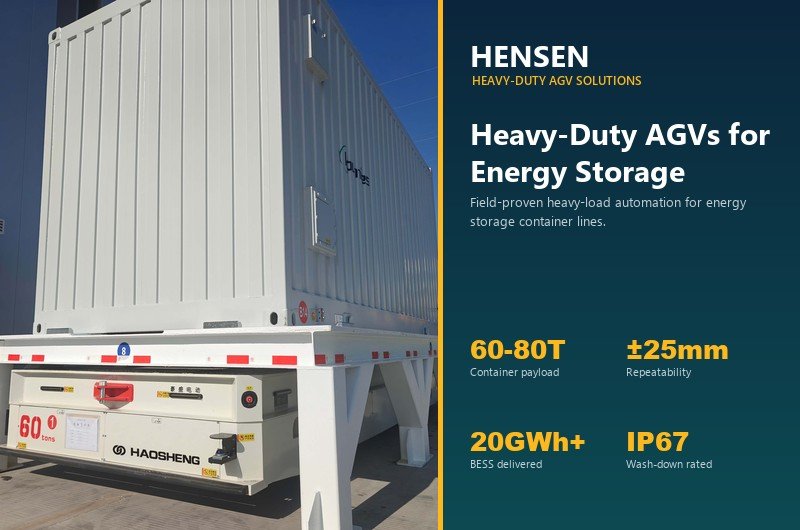
Hardware answers how to charge; strategy answers when. The goal: the fleet must never stop for charging as a scheduled event. Multi-shift plants — energy storage container factories are a typical example, with heavy AGVs shuttling battery cabinets between assembly, testing and dispatch — achieve this almost entirely with opportunity charging.
Opportunity charging: the default strategy
Opportunity charging means the vehicle tops up in the short idle windows of its normal work cycle instead of retiring for long sessions. Because LiFePO4 happily accepts partial charges, hundreds of small top-ups do the job of one long charge. Two design decisions make it work.
Put chargers where the AGV already waits
Every cycle has natural dwell points: the loading station while a crane sets the workpiece down, the buffer where the vehicle queues, the parking spur between missions. Charging stations at those exact points convert dead time into charge time at zero cost to throughput.
Let the scheduler manage the state of charge
The fleet scheduling software reads each vehicle’s state of charge over industrial WiFi or 5G and treats energy like any other dispatch constraint. Below a comfort threshold, the scheduler routes the vehicle to a charge-capable station for its next wait; below a hard threshold, it inserts a dedicated charging task before new missions are assigned. Operators see the whole picture on the control dashboard and on each vehicle’s 7-inch onboard screen.
Scheduled charging for one- and two-shift plants
If the plant sleeps, the AGV can too. Single- and double-shift operations often use just one station at the parking position and charge overnight or during breaks. The hardware is identical, and the strategy upgrades to opportunity charging later simply by adding stations at dwell points.
Battery swap: the exception, not the rule
Swapping discharged packs for charged ones sounds attractive, but on a heavy AGV the pack itself is heavy industrial equipment: swap means spare packs, handling gear and an exchange procedure. Opportunity charging has made it unnecessary in almost all heavy-duty applications; it survives only where a duty cycle has genuinely zero dwell time or no charging power exists along the route. If you are offered a swap system, ask first whether two more charging stations would solve the same problem for less.
Sizing the Battery and Charger Network
Battery capacity and charger placement are calculated together from the duty cycle, not guessed from the payload alone. A good manufacturer will ask for:
- Payload and vehicle deadweight — traction energy scales with total moving mass.
- Route length and cycles per hour — the real energy consumption per shift.
- Lifting work — hydraulic lifting under load is a significant energy consumer on jacking AGVs.
- Shift pattern — one shift, two, or true 24/7 with no natural charging window.
- Dwell map — where the vehicle waits, and for how long, in a normal cycle.
- Environment — ambient temperature affects usable capacity and belongs in the sizing margin.
The output is a battery whose state of charge oscillates comfortably mid-range across a full day, with charging stations at the dwell points that keep it there. Oversizing the pack “to be safe” adds deadweight hauled on every trip; undersizing forces dedicated charging stops. The math is simple but must use real cycle data — one of the questions worth settling before you sign, as covered in our RGV manufacturer checklist.
Monitoring, Care, and Service Life
Every pack ships with a battery management system (BMS) that watches cell voltages, temperatures and current, balances the cells, and disconnects the pack on any fault. On a well-integrated vehicle, the BMS talks to the onboard PLC, so battery health appears on the vehicle’s touchscreen and flows upstream over MQTT or TCP to the plant’s MES or fleet dashboard — and a cell group that drifts from its siblings is flagged months before it becomes a failure.
Day-to-day care is minimal — that is the point of the chemistry: clean contacts at routine inspections and a review of BMS logs at service intervals. Operated this way, the battery system supports the vehicle’s full working life, with pack refresh planned from measured capacity data rather than by surprise. Combined with multi-shift labor savings, the automation typically pays back in about 2–4 years.
HENSEN (Hangzhou Haosheng Electric Vehicle Co., Ltd.) designs and builds battery-powered heavy-duty AGVs and transfer carts from 1 to 500 tons — plus heavy-duty AGVs up to 800 tons — with LiFePO4 power systems, automatic side- and floor-contact charging, and in-house control and scheduling software, all CE marked and built under ISO 9001, delivered across wind power, metallurgy, sheet metal and construction machinery plants worldwide. Send us your route, payload and shift pattern, and our engineers will size the battery and charger layout and propose a configuration with budget pricing.
FAQ About Heavy-Duty AGV Battery Systems
Q: Why is LiFePO4 preferred over lead-acid for heavy AGVs?
A: Three reasons: it is thermally and chemically stable enough for an industrial vehicle, it accepts fast partial charging with no memory effect (which enables opportunity charging), and its long cycle life matches a 10–15 year vehicle without watering, equalization or a ventilated charging room.
Q: How does automatic AGV charging actually connect?
A: Either side-mounted contact plates that engage spring-loaded contacts on a trackside station, or floor plates the vehicle parks over and presses down onto. In both cases the contacts stay electrically dead until the vehicle is verified in position and the controllers complete a handshake.
Q: Can opportunity charging really support 24/7 operation?
A: Yes — it is the standard approach. Chargers are placed at the natural dwell points of the cycle (loading stations, buffers, parking spurs), and the scheduling software tops each vehicle up during idle windows so no dedicated charging downtime is ever scheduled.
Q: Do heavy-duty AGVs need battery swap systems?
A: Rarely. Swap adds spare packs and handling equipment, and opportunity charging has made it unnecessary for almost all duty cycles. It remains an option only where there is genuinely no dwell time in the cycle and no practical place to charge along the route.
Q: How is the battery monitored in service?
A: A battery management system tracks cell voltages, temperatures and current, reporting through the vehicle PLC to the onboard touchscreen and, over WiFi or 5G, to the plant MES or fleet dashboard — so capacity trends and cell drift are visible long before they cause downtime.
Conclusion
A heavy-duty AGV’s battery system succeeds when you treat it as an uptime strategy: a stable LiFePO4 pack sized from real cycle data, automatic charging stations placed where the vehicle already waits, and a scheduler that treats energy as one more dispatch constraint. Get those three layers right and charging disappears from the operating calendar — the vehicle simply never stops working. Insist that your manufacturer show you the duty-cycle math behind the pack they propose. Reach out to us to learn more.



Leave a comment