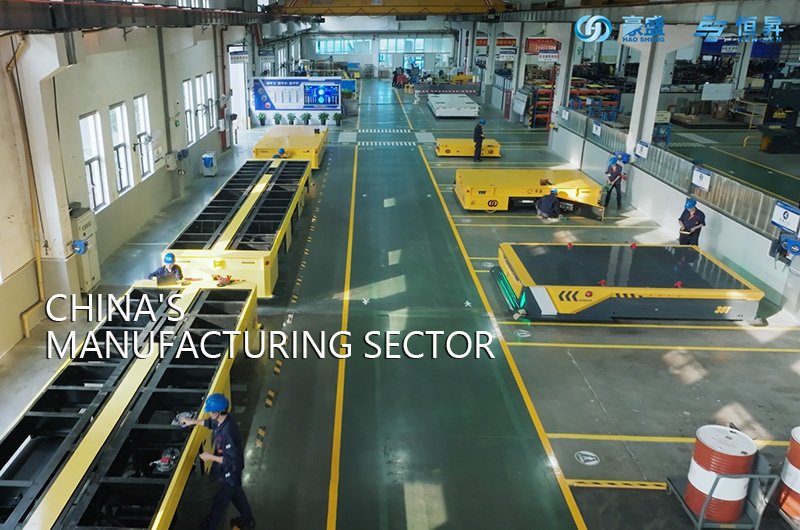
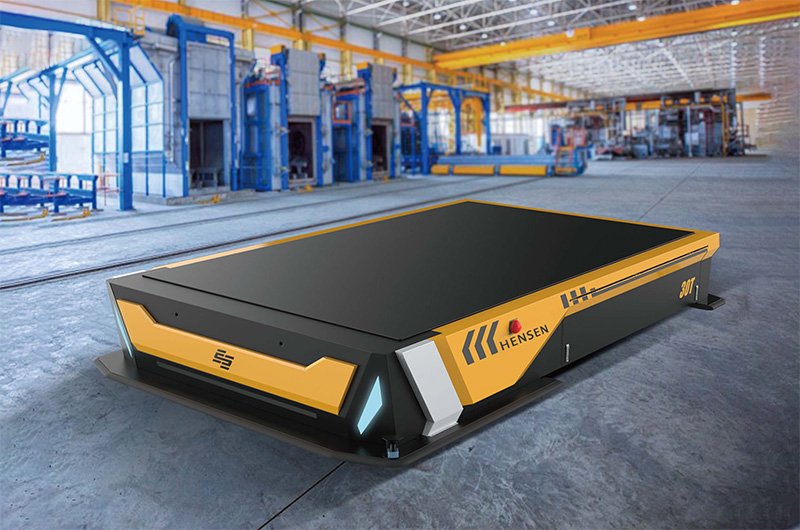
Modern industrial facilities face a growing contradiction between increasing product scales and restricted floor space. As manufacturers in sectors like wind power, energy storage, and prefabricated construction push the boundaries of tonnage, the demand for agility has never been higher. Traditional transport methods often fail to navigate the narrow aisles and complex intersections of legacy plants. Consequently, global enterprises are seeking more sophisticated mobility solutions to maximize their existing footprints. Partnering with a specialized Custom Omnidirectional Heavy Load AGV Supplier in China offers a strategic path to overcoming these spatial constraints while maintaining high throughput. HENSEN AGV has addressed this market need by developing a range of multi-modal drive systems that redefine heavy-material movement. By integrating advanced motion logic with high-capacity engineering, Hangzhou Haosheng Electric Vehicles Co., Ltd. enables factories to operate with unprecedented flexibility. This technical shift allows facilities to handle ultra-long or ultra-heavy loads in confined environments that were previously inaccessible to automated machinery.
Breaking the Turn Radius Barrier: The Engineering Logic of Omnidirectional Motion
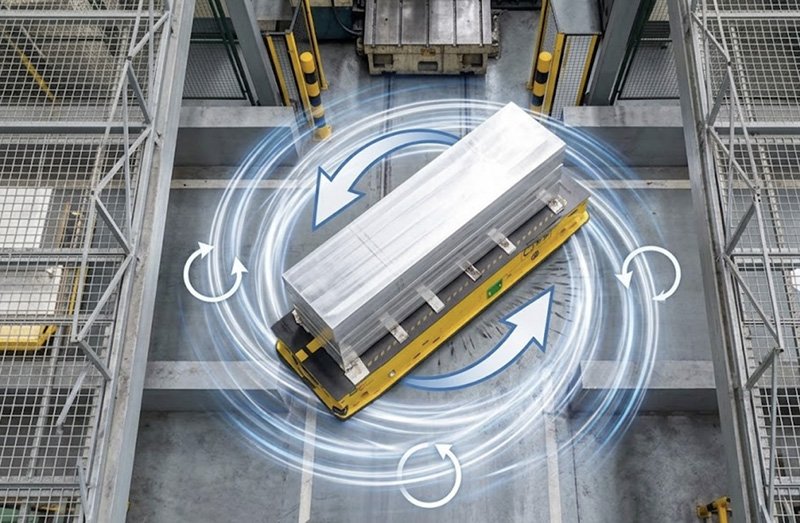
The primary limitation of traditional heavy-duty transporters lies in their fixed steering geometry. Standard dual-wheel or four-wheel steering systems require a significant turning radius to change direction, which consumes valuable floor space. In contrast, omnidirectional technology utilizes independent drive modules that allow the vehicle to move in any direction without rotating the chassis. This kinematic revolution means an AGV can transition from forward travel to lateral (sideways) movement or diagonal shifts instantaneously. HENSEN AGV (Hangzhou Haosheng Electric Vehicles Co., Ltd.) implements this by utilizing specialized wheel configurations and high-precision motor synchronization. Such a design effectively eliminates the “dead zones” in a factory layout, allowing materials to flow through tighter corridors.
Flexibility becomes a necessity when transporting oversized segments, such as those found in the prefabricated construction and wind power industries. These components often measure tens of meters in length, making traditional cornering impossible in standard workshops. Omnidirectional movement allows the vehicle to perform “crab-like” lateral shifts to bypass obstacles or dock precisely with stationary assembly stations. Furthermore, the ability to spin on the spot enables the AGV to reorient itself within its own footprint. By adopting this motion logic, HENSEN AGV (Hangzhou Haosheng Electric Vehicles Co., Ltd.) helps manufacturers reduce the width of required transit aisles. This optimization frequently leads to a direct increase in the amount of space available for production equipment or storage racks.
Question 1: Why is omnidirectional steering becoming a mandatory requirement for 50-ton+ logistics in aluminum and steel sectors?
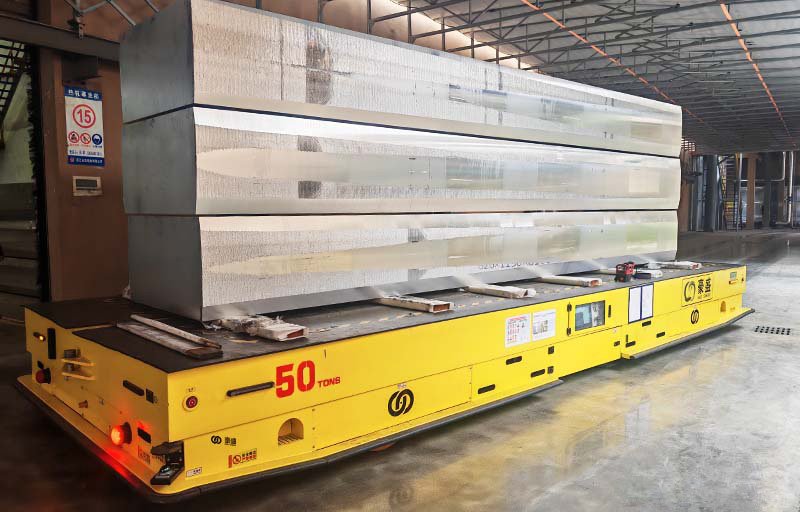
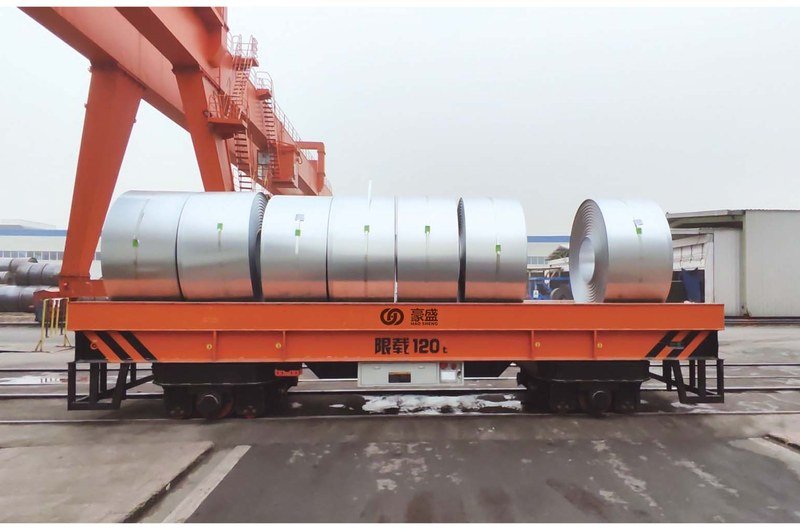
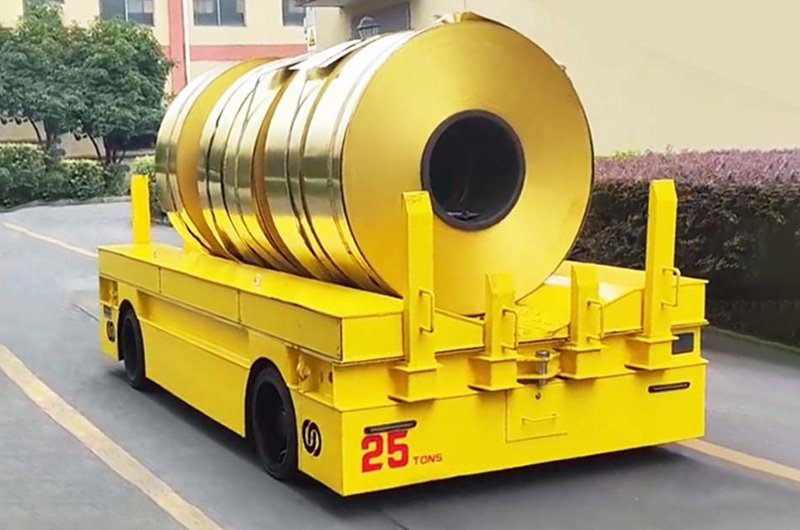
The metal processing industry operates under extreme conditions where heavy loads must interface with high-temperature smelting or rolling lines. In these environments, precision and speed are critical to preventing material cooling or production delays. A 50-ton smart AGV must navigate these busy areas without disrupting other workflows. Omnidirectional steering allows the vehicle to approach a furnace or rolling mill from any angle, facilitating much tighter docking tolerances. HENSEN AGV has demonstrated this capability in aluminum logistics, where vehicles must move massive coils through narrow processing zones. By eliminating the wide turns required by traditional trucks, the omnidirectional system ensures a more direct and efficient material flow. This precision docking reduces the risk of collisions with expensive stationary machinery, thereby enhancing overall facility safety.
Question 2: How does an omnidirectional system improve the “Facility Utilization Rate” compared to standard dual-wheel drive AGVs?
Facility utilization improves when an AGV can navigate aisles that are only slightly wider than the vehicle itself. Standard steering systems often require aisles to be 1.5 to 2 times the vehicle’s width to account for the turning arc. Omnidirectional units, however, can travel sideways into a storage bay or loading zone. This capability allows facilities to compress their layouts and increase the density of their storage areas. Hangzhou Haosheng Electric Vehicles Co., Ltd. helps clients quantify these gains by simulating different motion models within their specific plant blueprints. In many cases, transitioning to omnidirectional technology allows a plant to reclaim up to 30% of its transit space for core manufacturing activities. This reclaimed space provides a significant boost to the facility’s output without the need for expensive structural expansions.
Question 3: What allows a 300-ton wind power AGV to maintain millimeter-level alignment while performing complex spin-on-the-spot maneuvers?
Moving a 300-ton load requires more than just raw power; it demands a sophisticated digital synchronization layer. When a vehicle performs a spin-on-the-spot maneuver, every drive wheel must rotate at a specific speed and angle relative to the center of rotation. HENSEN AGV (Hangzhou Haosheng Electric Vehicles Co., Ltd.) utilizes proprietary algorithms to coordinate these movements with millimeter-level precision. The system continuously monitors feedback from high-resolution encoders to ensure that no single wheel slips or lags behind. This synchronization prevents the massive load from shifting, which is vital when handling delicate or top-heavy wind turbine components. Structural redundancy in the chassis also plays a role, ensuring that the frame can withstand the immense torsional forces generated during multidirectional maneuvers.
Question 4: How does the integration of omnidirectional technology support “Flexible Manufacturing” in the rapidly evolving energy storage industry?
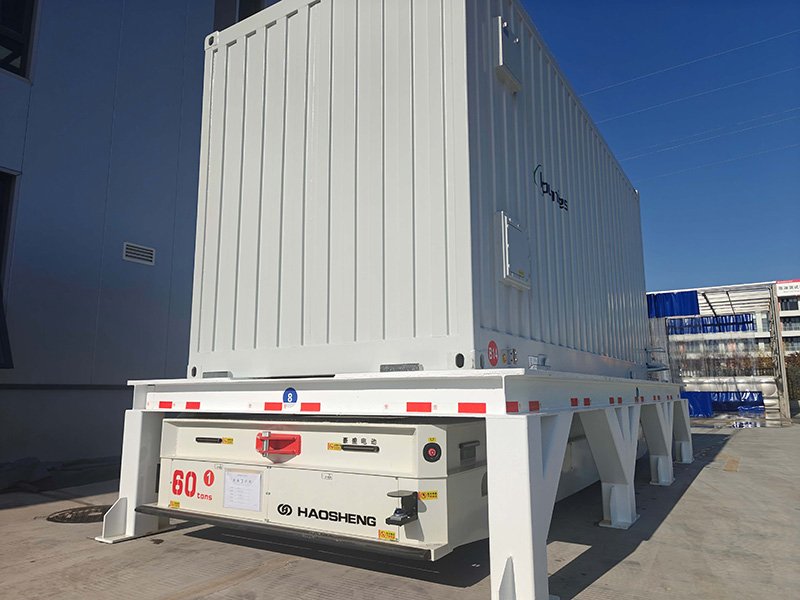
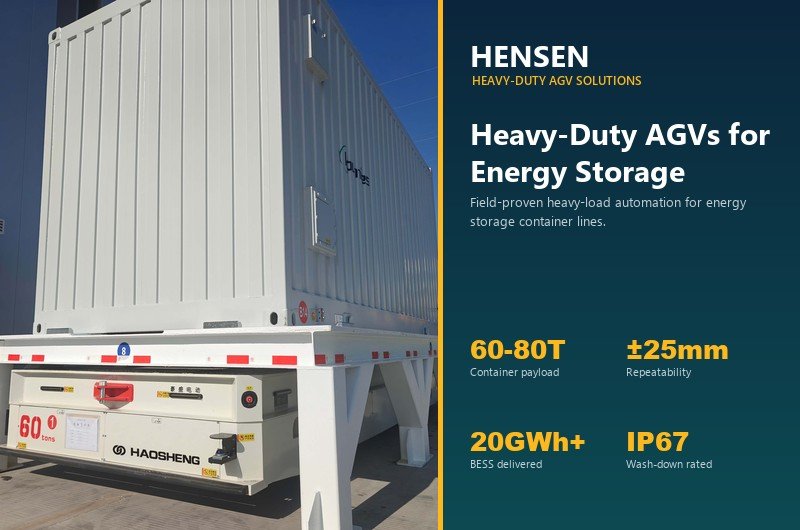
The energy storage sector requires the movement of large battery containers and power modules through various assembly and testing phases. Since production requirements change frequently, the facility layout must remain adaptable. Omnidirectional AGVs support this “Flexible Manufacturing” by allowing for rapid reconfiguration of the production line. These vehicles can navigate a maze of changing workstations because they do not rely on fixed tracks or wide turning paths. HENSEN AGV provides the agility needed to move these heavy modules between different testing cells and assembly points seamlessly. This adaptability allows manufacturers to scale their operations or change product types with minimal downtime. By removing the constraints of traditional material handling, the omnidirectional model serves as a cornerstone for the “smart factory” of the future.
Strategic Integration: Beyond the Machine—The Role of Specialized Scheduling
The full potential of an omnidirectional fleet is only realized when paired with an intelligent scheduling system. A central dispatch platform must calculate the most efficient path for every vehicle, taking full advantage of their lateral and diagonal capabilities. Hangzhou Haosheng Electric Vehicles Co., Ltd. develops scheduling software that integrates directly with a facility’s MES and ERP systems. This digital layer coordinates multiple AGVs to ensure they do not interfere with one another in narrow transit zones. For example, two omnidirectional units can pass each other in a corridor by performing synchronized lateral shifts. This level of coordination maximizes the throughput of the entire logistics system, rather than just optimizing individual moves.
Furthermore, the long-term return on investment (ROI) for these systems extends beyond simple labor savings. While the initial investment in advanced drive systems may be higher, the gains in production velocity and space efficiency are substantial. By reducing the time spent on complex maneuvering, an omnidirectional fleet can complete more moves per shift than traditional vehicles. HENSEN AGV (Hangzhou Haosheng Electric Vehicles Co., Ltd.) assists procurement teams in evaluating these long-term benefits through detailed operational audits. Most clients find that the reduction in facility footprint requirements and the increase in assembly speed lead to a faster payback period. As global competition intensifies, the ability to move heavy loads with surgical precision becomes a decisive competitive advantage.
Conclusion: Future-Proofing Heavy Industry Through Intelligent Mobility Solutions
The evolution of heavy industry demands a new generation of transport technology that can handle extreme loads without the need for expansive facilities. Omnidirectional AGVs represent a critical step in this direction, providing the agility necessary for modern, high-density manufacturing. By solving the challenges of narrow-space handling and precision docking, HENSEN AGV continues to set new standards for industrial efficiency. Hangzhou Haosheng Electric Vehicles Co., Ltd. remains a pivotal partner for enterprises seeking to modernize their logistics through custom-engineered solutions. These advancements ensure that heavy manufacturers can scale their production while maintaining safety and operational resilience. Ultimately, the transition to intelligent, omnidirectional mobility allows global industrial leaders to future-proof their operations against the spatial and logistical constraints of the 21st century.
For more information regarding omnidirectional heavy-duty AGV solutions and technical insights, please reach out to us now!

Leave a comment